
By Dr. Joseph H. Chang, MD | Board-Certified Ophthalmologist, Oculoplastic Surgery Specialist
That moment when you catch your reflection and barely recognize the tired, aged eyes staring back—despite feeling energetic and youthful inside—is more common than you might think. Drooping upper lids that make you look perpetually exhausted, under-eye bags that no amount of concealer can hide, or excess skin that obscures your natural eye shape can dramatically impact not just your appearance, but your confidence and even your vision. If you’re researching eyelid surgery in Bakersfield, you’ve likely encountered two terms: upper blepharoplasty and lower blepharoplasty. While both procedures rejuvenate the eye area, they address distinctly different concerns through specialized surgical techniques tailored to the unique anatomy of each eyelid.
As an oculoplastic surgeon with over 25 years of experience serving Bakersfield and Kern County, I’ve performed thousands of blepharoplasty procedures—each one customized to the individual patient’s anatomy, concerns, and aesthetic goals. The question I hear most frequently during consultations isn’t “Should I get eyelid surgery?” but rather “Which type of blepharoplasty do I need?” Understanding the fundamental differences between upper and lower eyelid surgery is essential for making informed decisions about your eye rejuvenation journey.
Let me walk you through everything you need to know about these transformative procedures, from the specific concerns each addresses to recovery expectations and long-term results. By the end of this comprehensive guide, you’ll understand exactly which approach—or combination of approaches—aligns with your unique needs.
Understanding Eyelid Aging: Why Upper and Lower Lids Age Differently
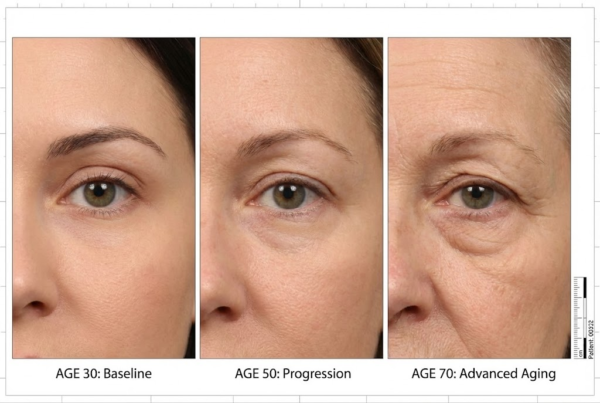
Before diving into surgical solutions, let’s understand what’s actually happening as your eyelids age. The upper and lower eyelids have fundamentally different anatomical structures, which explains why they develop distinct age-related changes requiring specialized surgical approaches.
Your upper eyelids contain the levator muscle responsible for opening your eyes, along with a firm tarsal plate that provides structural support and three separate fat compartments. As you age, several changes occur: the skin loses elasticity and begins to droop, the orbital septum (a membrane holding fat in place) weakens allowing fat to bulge forward or deflate, and in some cases, the levator muscle stretches or detaches, causing the lid to actually droop (a condition called ptosis). These changes create hooding, where excess skin folds over the natural crease, making you look tired, aged, or even affecting peripheral vision in severe cases.
Your lower eyelids have entirely different anatomy—thinner skin (the thinnest on your entire body), no rigid support structure like the upper lid’s tarsal plate, and different fat compartments that tend to herniate with age. The lower lids are also more susceptible to volume loss in surrounding areas (the cheeks and tear troughs), which creates hollowing and shadowing that accentuates under-eye bags. Additionally, the lower lid can lose tone over time, causing it to pull away from the eye or develop wrinkles and crepiness.
According to the International Society of Aesthetic Plastic Surgery’s 2024 Global Survey, eyelid surgery remains one of the top five most performed cosmetic procedures worldwide, with over 2.1 million procedures conducted annually. What’s particularly telling is that approximately 60% of patients opt for combined upper and lower procedures, recognizing that comprehensive eye rejuvenation often requires addressing both areas.
In my Bakersfield practice, I see patients from Seven Oaks to Southwest Bakersfield whose upper and lower lid concerns exist on a spectrum—some have predominantly upper lid issues, others mainly lower lid concerns, and many have both. The key to exceptional results lies in accurate diagnosis and customized surgical planning.
Upper Blepharoplasty: Restoring Your Natural Upper Eyelid Contour
Upper eyelid blepharoplasty addresses concerns above your lash line—the area from your upper lashes to your eyebrow. This procedure is remarkably effective for patients experiencing:
Excess Skin and Hooding
The most common concern I address is excess upper eyelid skin that creates “hooding”—where skin folds over the natural eyelid crease, sometimes even resting on the lashes. This can make eye makeup application impossible, create a heavy, tired appearance, and in severe cases, block peripheral vision.
Fullness or Puffiness
Bulging fat pads in the upper lid create puffiness or fullness, particularly in the inner corner near the nose. This genetic trait often worsens with age as the orbital septum weakens.
Loss of Eyelid Crease Definition
A well-defined eyelid crease creates the appearance of larger, more alert eyes. Excess skin can obliterate this natural crease, making eyes appear smaller and more closed.
Vision Impairment
When drooping becomes severe enough to affect the upper visual field, it transitions from cosmetic concern to functional problem. Many insurance companies cover upper blepharoplasty when vision testing documents significant impairment.
The Upper Blepharoplasty Procedure
During upper blepharoplasty at Modern Aesthetic Institute in Bakersfield, I make a carefully planned incision within your natural eyelid crease—the fold that appears when your eyes are open. This strategic placement ensures any resulting scar is virtually invisible, hidden within the natural contour. Through this incision, I remove precise amounts of excess skin, conservatively address any bulging fat (removing or repositioning as needed), and occasionally tighten underlying muscle if necessary.
The procedure typically takes 45 minutes to 1 hour for both eyes, performed under local anesthesia with sedation in our accredited surgical facility. My oculoplastic training provides unique advantages—I understand not just the aesthetics but the functional mechanics of the eyelids, the importance of maintaining proper eye closure, and the delicate balance between removing enough tissue to achieve improvement while preserving enough to maintain natural function.
What sets expert upper blepharoplasty apart is conservative tissue removal and attention to eyelid mechanics. Overly aggressive removal creates visible scar lines, lagophthalmos (inability to fully close the eyes), or that telltale “operated” look. The goal is creating a refreshed, natural appearance where the eyes look brighter and more alert—not obviously “done.”
Lower Blepharoplasty: Addressing Under-Eye Bags and Rejuvenation
Lower eyelid blepharoplasty tackles the complex concerns below your lash line—an area notorious for revealing age, fatigue, and genetic predispositions. Lower lid surgery addresses:
Under-Eye Bags and Fat Herniation
Those puffy bulges under your eyes—commonly called “bags”—result from fat compartments herniating through weakened orbital septum. This creates the classic aged, tired appearance that bothers many of my Bakersfield patients.
Excess Skin and Wrinkles
The paper-thin lower eyelid skin is among the first to show aging signs—fine lines, crepiness, wrinkles, and loose skin that creates folds or shadows.
Tear Trough Deformity and Hollowing
The groove running from the inner corner of your eye diagonally across the under-eye area (the tear trough) can create shadowing that looks like dark circles. This is often exacerbated by volume loss in the cheek area.
Lower Eyelid Laxity
With age, the lower lid can lose its tight attachment to the eyeball, causing it to sag or pull away slightly—both an aesthetic and functional concern.
Dark Circles and Shadowing
While pigmentation issues require different treatments, many “dark circles” are actually shadows created by structural concerns that blepharoplasty can address.
The Lower Blepharoplasty Procedure
Lower blepharoplasty is technically more complex than upper lid surgery due to the delicate anatomy and multiple concerns that often need simultaneous addressing. I use two primary approaches depending on the patient’s specific anatomy:
Transconjunctival Approach (inside the eyelid): For patients with fat herniation but good skin quality, I access the fat compartments from inside the lower lid through the conjunctiva (the pink tissue inside). This approach leaves no external scar and is ideal for younger patients with predominantly fat-related concerns. I often reposition (rather than remove) fat to fill hollow areas, creating smooth contour from lid to cheek.
Transcutaneous Approach (external): When excess skin requires removal, I make a carefully placed incision just below the lash line. This allows me to address fat herniation, remove excess skin, and tighten underlying structures. The incision heals remarkably well, becoming nearly imperceptible within months.
Many lower blepharoplasty procedures also involve canthopexy or canthoplasty—techniques to tighten and support the lower lid, preventing postoperative drooping and ensuring the lid maintains its natural position against the eye.
The procedure typically takes 1-1.5 hours for both eyes, and I often combine it with fat repositioning, laser resurfacing for skin quality, or even filler placement to optimize under-eye contour.
5 Key Differences Between Upper and Lower Blepharoplasty
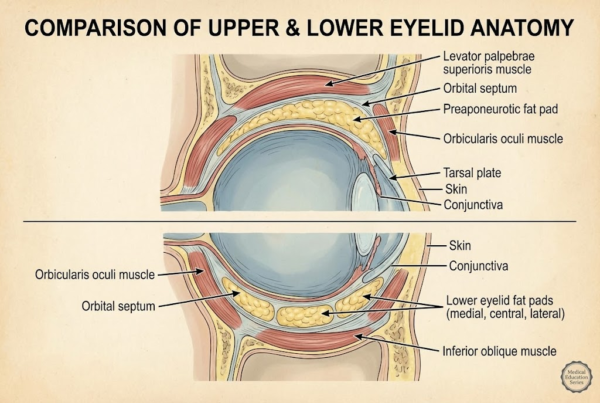
Understanding these distinctions helps patients make informed decisions:
1. Anatomical Complexity
Upper blepharoplasty is generally more straightforward—remove excess skin and fat through a well-hidden incision. Lower blepharoplasty involves more complex decision-making about fat repositioning vs. removal, skin removal considerations, lower lid support, and transition to the cheek area.
2. Recovery Timeline
Upper lid recovery is typically faster. Most patients return to work within 5-7 days, with swelling and bruising resolving quickly. Lower blepharoplasty recovery takes slightly longer—usually 10-14 days before feeling socially comfortable, with swelling persisting longer due to the delicate tissue and more complex surgical manipulation.
3. Scar Visibility
Upper blepharoplasty scars hide beautifully within the natural eyelid crease, becoming virtually invisible within weeks. Lower blepharoplasty scars (when external incisions are used) sit just below the lash line and, while they heal remarkably well, may be slightly more visible during early healing.
4. Complication Profile
Both procedures are safe with experienced surgeons, but potential complications differ. Upper lid concerns include asymmetry, lagophthalmos (inability to fully close eyes), or visible scarring. Lower lid specific risks include ectropion (lid pulling away from eye), excessive tear production, or persistent swelling.
5. Insurance Coverage Potential
Upper blepharoplasty may be covered by insurance when documented vision impairment exists—typically requiring visual field testing showing peripheral vision obstruction. Lower blepharoplasty is almost always considered cosmetic and not covered by insurance.
Combined Upper and Lower Blepharoplasty: Comprehensive Eye Rejuvenation
Many patients benefit most from combined procedures addressing both upper and lower lid concerns simultaneously. The advantages are compelling:
Single Recovery Period
Rather than enduring two separate recoveries, you heal once and achieve comprehensive results. This is particularly appealing for busy professionals in Bakersfield who can’t afford multiple weeks away from work.
Harmonious Results
Treating both areas ensures balanced, proportionate rejuvenation. Addressing only one area sometimes draws attention to the untreated area, while comprehensive treatment creates overall harmony.
Potential Cost Savings
While combined procedures cost more upfront than single-area treatment, the total is typically less than two separate procedures due to shared facility fees, anesthesia costs, and surgical time.
Optimal Aesthetic Outcome
The eyes function as a unit—upper and lower lids work together to create overall impression. Comprehensive treatment allows me to optimize the relationship between both areas for the most natural, youthful result.
According to data from the American Society of Plastic Surgeons, combined blepharoplasty procedures have increased by 22% over the past five years, reflecting growing patient awareness that comprehensive treatment often delivers superior results.
During consultations at Modern Aesthetic Institute, I carefully evaluate both upper and lower lids, even if patients initially express concern about only one area. Sometimes what appears to be a lower lid problem is actually caused by upper lid hooding, or vice versa. This comprehensive assessment ensures we create the optimal treatment plan.
Recovery and Results: What to Expect After Blepharoplasty
Understanding the healing process helps patients prepare mentally and practically for their surgery:
Immediate Post-Operative Period (Days 1-3)
Expect some swelling, bruising, and mild discomfort managed easily with prescribed or over-the-counter pain medication. Your eyes may feel tight, and vision might be slightly blurry from ointment. I provide detailed aftercare instructions including cold compresses, head elevation, and activity restrictions.
Early Recovery (Days 4-7)
Swelling and bruising peak around day 3-4, then begin improving. Most patients look presentable enough for work by day 5-7 for upper blepharoplasty, day 7-10 for lower procedures. Sutures are typically removed around day 5-7, marking a significant milestone in your recovery.
Intermediate Healing (Weeks 2-6)
You’ll see progressive improvement as residual swelling resolves and incisions mature. Most patients return to all normal activities including exercise by week 3-4. Any remaining swelling is subtle and typically only noticeable to you.
Long-Term Results (Months 3-6)
Final results emerge as tissues fully settle, scars mature to near-invisible lines, and any residual swelling completely resolves. This is when you truly appreciate the transformation—brighter, more alert, naturally youthful eyes that better reflect how you feel inside.
Longevity of Results
Upper blepharoplasty results typically last 10-15 years or more—many patients never require revision. Lower blepharoplasty results also last many years, though the under-eye area may continue aging and occasionally benefit from minor touch-ups or complementary treatments like filler.
According to research published in Ophthalmology, patient satisfaction rates for blepharoplasty remain remarkably high, with over 90% of patients reporting satisfaction at 12-month follow-up. The keys to success? Choosing an experienced oculoplastic surgeon, having realistic expectations, and following post-operative care instructions meticulously.
Cost Considerations: Investment in Your Eye Rejuvenation
Let’s address the practical financial aspect. Blepharoplasty costs vary based on several factors:
Upper Blepharoplasty Costs
In Bakersfield and Kern County, upper blepharoplasty typically ranges from $4,000-$6,000 depending on complexity, facility fees, anesthesia, and whether ptosis repair is necessary. When performed for vision impairment (documented through visual field testing), insurance may cover the procedure minus any cosmetic enhancement components.
Lower Blepharoplasty Costs
Lower blepharoplasty generally costs $5,000-$8,000 reflecting the increased technical complexity, longer surgical time, and advanced techniques often required. Lower blepharoplasty is typically considered cosmetic and not covered by insurance.
Combined Procedure Costs
Combined upper and lower blepharoplasty usually ranges from $8,000-$12,000—less than the combined cost of two separate procedures due to shared overhead expenses. This represents the best value for patients requiring comprehensive eye rejuvenation.
Factors Affecting Cost
Several variables influence final pricing:
- Surgeon expertise and credentials: Board-certified oculoplastic surgeons typically command higher fees reflecting specialized training
- Facility fees: Accredited surgical centers ensure safety but have associated costs
- Anesthesia type: Local with sedation vs. general anesthesia
- Procedure complexity: Revision surgery, asymmetry correction, or additional techniques increase complexity
- Geographic location: Costs in major metropolitan areas typically exceed those in regions like Bakersfield
Financing Options
Many practices, including Modern Aesthetic Institute, offer financing through companies like CareCredit, Alphaeon Credit, or Prosper Healthcare Lending, allowing patients to manage costs through monthly payments rather than requiring full payment upfront.
Choosing Your Blepharoplasty Surgeon: Why Oculoplastic Specialization Matters
Perhaps the most critical decision you’ll make isn’t whether to have blepharoplasty, but who will perform it. While many plastic surgeons perform eyelid surgery, oculoplastic surgeons bring unique, specialized expertise:
Dual Training in Ophthalmology and Plastic Surgery
Oculoplastic surgeons complete medical school, ophthalmology residency (4 years), and then fellowship training specifically in oculoplastic and reconstructive surgery (1-2 additional years). This extensive training provides intimate knowledge of eye anatomy, function, and aesthetics that general plastic surgeons don’t possess.
Understanding Both Function and Aesthetics
Your eyelids aren’t just aesthetic features—they’re functional structures protecting your eyes. Oculoplastic surgeons understand the delicate balance between achieving beautiful results and maintaining optimal eyelid function, proper eye closure, and tear film health.
Experience with Complex Anatomy
The eye area contains critical structures—lacrimal (tear) ducts, complex muscles, delicate blood vessels, and nerves—all requiring specialized knowledge to navigate safely. My training at UCLA’s Jules Stein Eye Institute, one of the nation’s premier ophthalmology centers, provided intensive exposure to this complex anatomy.
Ability to Address Functional Concerns
If your drooping causes vision problems, dry eye, or other functional issues, an oculoplastic surgeon can address both aesthetic and functional concerns simultaneously—something general cosmetic surgeons cannot do.
When researching surgeons in Bakersfield or Kern County, verify board certification (American Board of Ophthalmology for oculoplastic surgeons), review extensive before-and-after galleries, read patient reviews, and schedule consultations to assess rapport and communication style.
Making Your Decision: Are You a Good Candidate for Blepharoplasty?
Ideal blepharoplasty candidates typically share these characteristics:
- Physical health: Good overall health without conditions that impair healing
- Realistic expectations: Understanding what blepharoplasty can and cannot achieve
- Specific concerns: Excess upper eyelid skin, under-eye bags, vision impairment, or tired appearance
- Non-smoker: Smoking significantly impairs healing and increases complications
- Stable weight: Major weight fluctuations can affect results
- Emotional readiness: Prepared for recovery period and gradual result emergence
Patients who may need alternative or additional treatments include those with:
- Significant brow ptosis: May need brow lift instead of or in addition to upper blepharoplasty
- Severe under-eye hollowing: May benefit from filler or fat grafting in combination with surgery
- Major skin laxity: Might require additional skin tightening procedures
- Active eye disease: Certain conditions require treatment before elective eyelid surgery
During your consultation at Modern Aesthetic Institute in Bakersfield, we’ll thoroughly evaluate your anatomy, discuss your concerns and goals, review your medical history, and determine whether blepharoplasty aligns with your needs. If it doesn’t, I’ll honestly tell you and suggest appropriate alternatives.
Take the Next Step Toward Brighter, More Youthful Eyes
Whether you’re bothered by upper lid hooding blocking your vision, under-eye bags making you look perpetually exhausted, or both, blepharoplasty offers transformative results that can restore the bright, alert, youthful eyes that better reflect how you feel inside.
Ready to explore your options for eyelid rejuvenation in Bakersfield? Contact Modern Aesthetic Institute at (661) 535-0149 or visit us at 4000 Empire Drive, Suite 300, Bakersfield, CA 93309. We serve patients throughout Kern County including Seven Oaks, Northwest Bakersfield, Stockdale, Southwest Bakersfield, and surrounding communities.
During your personalized consultation, I’ll evaluate your unique anatomy, discuss which type of blepharoplasty—upper, lower, or combined—best addresses your concerns, review before-and-after photos of similar patients, and answer all your questions about the procedure, recovery, and expected results. Learn more about our approach to eyelid surgery at modernaesthetic.institute.
About Dr. Joseph H. Chang
Dr. Joseph H. Chang is a board-certified ophthalmologist specializing in oculoplastic surgery with over 25 years of experience serving Bakersfield and Kern County. Trained at UCLA’s prestigious Jules Stein Eye Institute, Dr. Chang brings specialized expertise in eyelid anatomy, function, and aesthetics that only dual training in ophthalmology and oculoplastic surgery provides. Having performed thousands of blepharoplasty procedures, Dr. Chang is recognized for natural-looking results that restore youthful eye appearance while maintaining optimal function. At Modern Aesthetic Institute, his philosophy centers on personalized care, honest guidance about realistic expectations, and surgical precision that delivers beautiful, lasting results. His specialized training uniquely positions him to address both cosmetic and functional eyelid concerns, ensuring comprehensive care that general plastic surgeons cannot provide.
Frequently Asked Questions About Blepharoplasty
How do I know if I need upper or lower blepharoplasty in Bakersfield?
The determination depends on your specific concerns. If you have excess skin above your eyes, hooding, or vision obstruction, upper blepharoplasty addresses these issues. If you have under-eye bags, puffiness, or excess lower lid skin, lower blepharoplasty is appropriate. Many patients benefit from both. During consultation, I’ll assess your entire eye area and recommend the approach that best addresses your anatomy and goals. Sometimes what appears to be a lower lid problem is actually caused by upper lid hooding, so comprehensive evaluation is essential.
Will insurance cover my blepharoplasty in California?
Insurance may cover upper blepharoplasty when excess skin causes documented vision impairment. This requires visual field testing showing peripheral vision obstruction from drooping lids. The cosmetic component (improving appearance beyond functional correction) typically isn’t covered. Lower blepharoplasty is almost always considered cosmetic and not covered. Dr. Chang’s office can help determine if your upper lid concerns might qualify for insurance coverage and provide documentation if needed.
How long does blepharoplasty recovery take, and when can I return to work?
Recovery timelines vary between procedures. For upper blepharoplasty, most patients return to work within 5-7 days, with sutures removed around day 5-6. Lower blepharoplasty recovery takes slightly longer—usually 10-14 days before feeling socially comfortable. Swelling and bruising are most visible in the first week, then improve progressively. Final results emerge over 3-6 months as residual swelling resolves and incisions fully mature. Most patients resume exercise and all normal activities within 3-4 weeks.
What are the risks and potential complications of eyelid surgery?
Blepharoplasty is generally safe with experienced surgeons, but all surgery carries risks. Upper blepharoplasty risks include asymmetry, visible scarring, lagophthalmos (inability to fully close eyes), or over-removal of tissue. Lower blepharoplasty specific risks include ectropion (lower lid pulling away from eye), persistent swelling, or contour irregularities. Rare risks for both include infection, bleeding, or vision changes. Choosing a board-certified oculoplastic surgeon like Dr. Chang significantly minimizes these risks. According to ASPS data, overall complication rates for blepharoplasty are under 4% with qualified surgeons.
Can blepharoplasty be combined with other facial procedures?
Absolutely. Blepharoplasty frequently combines with other facial rejuvenation procedures for comprehensive results. Common combinations include brow lift (addressing drooping brows that contribute to upper lid heaviness), facelift or neck lift (for overall facial rejuvenation), laser resurfacing (improving skin texture and quality), or injectable treatments (addressing volume loss or fine lines). Combining procedures often provides more harmonious results and allows single recovery period. During consultation, we’ll discuss whether additional procedures would enhance your outcome.
How long do blepharoplasty results last?
Results are long-lasting but not permanent since natural aging continues. Upper blepharoplasty results typically last 10-15 years or more—many patients never require revision. Lower blepharoplasty also provides lasting improvement, though the under-eye area may continue showing aging signs over time. Factors affecting longevity include genetics, sun protection, overall skin care, lifestyle habits like smoking, and natural aging patterns. Most patients enjoy their results for many years before considering any touch-up procedures.
What’s the difference between blepharoplasty and ptosis repair?
While both address the upper eyelids, they’re distinct procedures. Blepharoplasty removes excess skin and fat from drooping or puffy eyelids—it’s primarily skin removal. Ptosis repair addresses actual drooping of the eyelid margin itself, caused by stretched or detached levator muscle (the muscle that lifts your lid). Ptosis makes you look sleepy because the lid margin sits low over the pupil. Some patients need both procedures—excess skin removal plus muscle tightening. As an oculoplastic surgeon, Dr. Chang can identify and address both conditions during comprehensive eyelid rejuvenation.
Is blepharoplasty painful? What’s the recovery like?
Most patients are pleasantly surprised by minimal discomfort after blepharoplasty. The eyelids have relatively few pain nerve endings, so pain is typically mild—more of an aching or tightness managed easily with over-the-counter or prescribed pain medication. The first 2-3 days involve the most swelling and discomfort, which improves quickly. Many patients describe the recovery as easier than anticipated. Following post-operative instructions (cold compresses, head elevation, activity restrictions) significantly improves comfort and speeds healing. Most patients feel well enough to venture out with sunglasses by day 5-7.