
Can Botox fix hooded eyes? Botox can give a subtle brow lift that opens the eyes when mild hooding is driven by muscle pull, softening the look without surgery. It cannot remove excess eyelid skin, so moderate to severe hooding usually needs blepharoplasty. Here is how to tell which one you actually need.
You’ve noticed your eyes don’t look quite the same anymore. Your upper eyelids seem heavier, your eye makeup doesn’t apply the way it used to, and friends keep asking if you’re tired even when you feel perfectly rested. When you search for solutions online, you’re bombarded with conflicting advice—some sources promise that Botox can lift droopy eyelids, while others insist only surgery can help. The confusion is real, and making the wrong choice means wasting money on treatments that won’t address your actual concern. At Modern Aesthetic Institute in Bakersfield, Dr. Joseph H. Chang helps patients understand the critical distinction between conditions that respond beautifully to injectables versus those requiring surgical intervention. With his unique dual expertise as both an ophthalmologist trained in oculoplastic surgery at UCLA’s Jules Stein Eye Institute and a UCLA-trained oculoplastic surgeon, Dr. Chang provides the honest, expert guidance you need to choose the right treatment for your specific eyelid concerns.
Understanding the Anatomy: What’s Really Happening to Your Eyes
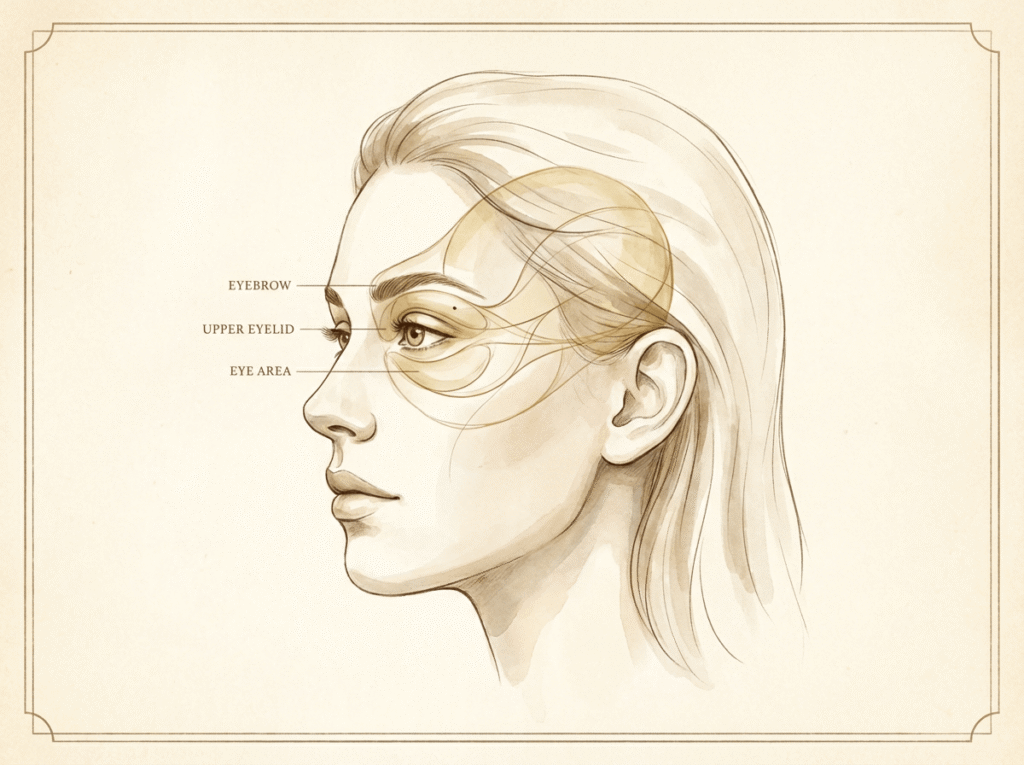
Before determining whether Botox or blepharoplasty will serve you better, it’s essential to understand what’s actually causing your eyelid appearance to change. Many patients use terms like “hooded,” “droopy,” or “saggy” interchangeably, but these descriptions can refer to distinctly different anatomical issues requiring completely different solutions.
Your upper eyelid structure involves multiple components working in harmony. The levator muscle lifts your eyelid when you open your eyes. The skin covering your eyelid naturally has some laxity, allowing movement and expression. Fat pads sit behind a thin membrane, providing volume and cushioning. Your eyebrow position significantly influences how much eyelid skin is visible—when brows descend, they push additional tissue onto your eyelids, creating or worsening hooding.
As we age, several changes occur simultaneously. Skin loses elasticity and begins to sag. Fat pads can either deflate (creating hollowing) or prolapse forward (creating bulges). The muscles that lift both eyebrows and eyelids can weaken. Bone resorption in the orbital rim changes the structural support for surrounding tissues. These cumulative effects create the tired, aged appearance around your eyes that brings most patients to Dr. Chang’s Bakersfield practice.
Understanding which specific changes are affecting YOUR eyes determines whether non-surgical or surgical treatment provides optimal results. This is where Dr. Chang’s dual expertise becomes invaluable—his oculoplastic training enables precise diagnosis, while his extensive injectable experience means he can offer both surgical and non-surgical solutions tailored to your anatomy.
True Hooded Eyes: A Structural Characteristic vs. Age Related Changes
Some people are born with hooded eyes—a natural eye shape where the brow bone is less prominent and skin from the upper eyelid extends over the crease. This isn’t a defect or flaw; it’s simply an anatomical variation common across many ethnicities. Celebrities with naturally hooded eyes include Jennifer Lawrence, Blake Lively, and Taylor Swift—all considered beauties despite (or enhanced by) this feature.
Natural hooding differs fundamentally from age-related eyelid changes. With true hooded eyes, the issue isn’t excess skin or fat; it’s the structural relationship between your brow bone, upper eyelid, and eye socket. Makeup artists adapt techniques for hooded eyes, and many people with this eye shape never seek treatment because it’s simply part of their natural appearance.
However, even naturally hooded eyes can develop age-related changes that compound the hooding effect. You might have had hooded eyes your entire life without concern, but now notice they appear more pronounced. In these cases, you’re dealing with both your natural eye shape AND aging changes—each requiring different considerations when planning treatment.
Dr. Chang’s comprehensive evaluation distinguishes between these scenarios during your Bakersfield consultation. If your hooding is primarily structural rather than excess skin, he provides honest guidance about whether intervention makes sense and what realistic outcomes to expect.
The Brow Ptosis Factor: When Your Eyebrows Are the Real Culprit
Many patients seek treatment for “droopy eyelids” when their actual issue is descended eyebrows—a condition called brow ptosis. As the muscles supporting your eyebrows weaken and skin loses elasticity, brows gradually descend from their youthful position. This descent pushes extra tissue onto your upper eyelids, creating the appearance of excess eyelid skin even when your actual eyelid skin quantity is normal.
Here’s where proper diagnosis becomes critical: removing eyelid skin surgically when your primary issue is brow ptosis won’t achieve the results you desire. In fact, it might create an unnatural appearance by removing eyelid skin that isn’t actually excessive—the problem is tissue being pushed down from above, not excess tissue on the eyelid itself.
Dr. Chang performs a simple test during consultation to determine how much of your eyelid appearance issue stems from brow position. He’ll gently lift your eyebrows to their youthful position and ask you to look in a mirror. If this maneuver dramatically improves your eyelid appearance, brow lifting (either surgical or non-surgical with Botox and fillers) addresses your concern more effectively than eyelid surgery.
The beauty of Dr. Chang’s comprehensive expertise is his ability to offer multiple solutions. Some patients benefit from non-surgical brow lifting using strategic Botox placement to relax muscles that pull brows downward, combined with filler to provide lifting support. Others achieve optimal results from surgical brow lifting or a combination of brow and eyelid procedures. His honest assessment ensures you invest in treatments targeting your specific anatomy.
When Botox Works Beautifully for Upper Eyelid Concerns

Botox and similar neuromodulators (like Dysport, Dr. Chang’s specialty) can create impressive improvements for specific eyelid concerns—when properly diagnosed and skillfully applied. Understanding what Botox can realistically achieve prevents disappointment and helps you determine if this non-surgical approach suits your situation.
The Brow Lift Effect: Strategic Muscle Relaxation
Botox’s most effective application for eyelid improvement involves strategic eyebrow lifting. Your forehead contains muscles that work in opposition—some lift your eyebrows (the frontalis muscle), while others pull them downward (primarily the corrugator and orbicularis oculi muscles). When the depressor muscles overpower the lifting muscle, your brows descend, pushing tissue onto your eyelids.
By strategically injecting Botox into the depressor muscles while leaving the lifting muscle functional, Dr. Chang creates a subtle but noticeable brow elevation. As the depressors relax, the unopposed frontalis muscle lifts your brows to a more youthful position. This elevation removes the downward pressure on your eyelids, creating more visible eyelid space and a refreshed, alert appearance.
This “Botox brow lift” works beautifully for patients with:
- Mild to moderate brow descent
- Heavy-feeling upper eyelids from brow pressure
- Asymmetric brows (one lower than the other)
- Early aging changes before significant skin excess develops
The results appear gradually over 7-14 days as the Botox takes effect, creating natural-looking elevation that doesn’t appear artificial or startled. Dr. Chang’s 25+ years of injectable experience ensure precise placement that achieves optimal lift without unwanted side effects.
The Lateral Eye Opening: Subtle But Impactful
Another strategic Botox application involves the outer edge of the upper eyelid where the orbicularis oculi muscle (which closes your eyes) can create heaviness. Carefully placed Botox in this lateral area allows the upper eyelid to lift slightly, creating a subtle eye-opening effect that makes you appear more awake and refreshed.
This technique requires exceptional skill and precise anatomical knowledge—inject too much or in the wrong location, and you risk complications like lid ptosis (actual drooping) or asymmetry. Dr. Chang’s oculoplastic training and decades of experience provide the expertise necessary to perform this advanced technique safely and effectively.
Realistic Expectations: What Botox Cannot Do
While Botox offers impressive benefits for appropriate candidates, it has clear limitations. Botox CANNOT:
- Remove excess eyelid skin that has already developed
- Address significantly prolapsed fat pads creating bulges
- Correct severe brow ptosis requiring substantial lifting
- Fix underlying eyelid structural issues or muscle weakness
- Provide permanent results (effects last 3-4 months)
Patients who receive Botox for issues that require surgery often feel frustrated that the treatment didn’t “work,” when the reality is simply that Botox was the wrong tool for their specific problem. This is why Dr. Chang’s comprehensive diagnostic approach is so valuable—he won’t recommend Botox if surgery would serve you better, and vice versa.
7 Signs You’re a Perfect Candidate for Non Surgical Botox Treatment
1. Your Upper Eyelids Feel Heavier Later in the Day If you notice your eyelid appearance worsens as the day progresses—feeling heavier, looking more hooded—this suggests muscle fatigue rather than structural excess. Your frontalis muscle tires from constantly fighting descending brows, and Botox addresses this beautifully by relaxing the opposing depressor muscles.
2. Manually Lifting Your Brows Dramatically Improves Your Appearance Stand in front of a mirror and gently place your fingers on your eyebrows, lifting them slightly upward. If this maneuver creates the refreshed eye appearance you desire, you’re likely a perfect candidate for Botox brow lifting rather than eyelid surgery.
3. You Have Minimal Actual Excess Eyelid Skin When you close your eyes, observe your upper eyelid skin. If it appears relatively smooth without significant excess tissue hanging over your lash line, your hooding primarily results from brow position or muscle dynamics rather than true skin excess. Botox addresses these issues effectively.
4. You’re Not Ready for Surgery (But Want Improvement) Perhaps you’re considering eyelid surgery eventually but aren’t ready for the commitment, recovery, or expense. Botox provides meaningful improvement as a bridge treatment, buying you time while you consider surgical options or allowing you to see if upper face enhancement meets your goals before pursuing more invasive procedures.
5. You Notice One Eyebrow Sits Lower Than the Other Facial asymmetry is normal, and many people have one eyebrow naturally positioned lower than the other. This creates uneven eyelid appearance that Botox can address by lifting the descended side while maintaining balance with the other. Dr. Chang’s artistic eye and precise technique restore symmetry without obvious intervention.
6. You’re in Your 30s-40s With Early Aging Signs Proactive patients in their thirties and forties often notice early brow descent and upper eyelid changes before significant skin excess develops. Starting with preventative Botox treatments can slow progression and maintain your youthful appearance for years, potentially delaying or eliminating the need for surgery altogether.
7. You Prefer Gradual, Adjustable Enhancement Unlike surgery’s permanent changes, Botox allows gradual refinement over multiple sessions. If you appreciate the ability to adjust your treatment based on results, trying subtle enhancement before committing to more aggressive intervention, Botox’s temporary nature becomes an advantage rather than limitation.
When Blepharoplasty Becomes Necessary: Recognizing True Excess

Despite Botox’s impressive capabilities for appropriate candidates, some eyelid conditions simply require surgical intervention. Recognizing when you’ve crossed the threshold from injectable-treatable to surgery-needed prevents frustration, wasted resources, and delayed results.
The Skin Excess Test: A Simple Self Assessment
Here’s how to evaluate whether you have true excess eyelid skin: Stand in front of a well-lit mirror looking straight ahead with a neutral expression. Observe your upper eyelids:
Minimal to No Excess: You can see most or all of your eyelid space between lash line and crease. When you close your eyes, the skin appears relatively smooth without significant overhang. The eyelid area looks heavy primarily due to position (brow descent) rather than quantity of tissue.
Moderate Excess: Your eyelid crease is partially or fully hidden by skin from above. When you close your eyes, there’s noticeable loose skin that extends beyond the natural eyelid. You have difficulty applying eyeliner or eyeshadow because the excess skin interferes.
Significant Excess: Skin from your upper eyelid hangs over your lash line, possibly even obscuring part of your vision, especially peripherally. Your eyelid crease is completely hidden. The excess skin creates folds and may make your eyes appear smaller or more closed than they actually are.
If you fall into the moderate or significant category, you have anatomical excess that requires removal rather than repositioning. No amount of Botox can eliminate tissue that’s actually present—surgery becomes the appropriate solution.
Fat Pad Prolapse: The Bulge That Botox Can’t Fix
Another common aging change involves fat pads that normally sit behind a thin membrane in your upper eyelid. As this membrane weakens, fat can push forward, creating bulges that make your eyelids appear puffy and full. This is particularly noticeable in the inner corner of the upper eyelid near your nose.
Prolapsed fat pads require surgical repositioning or removal. Botox cannot address this anatomical issue because it’s not related to muscle activity or positioning. During blepharoplasty, Dr. Chang can remove or reposition these fat pads, creating smooth, youthful eyelid contours that Botox simply cannot achieve.
Vision Obstruction: When Function Meets Aesthetics
When excess upper eyelid skin becomes severe enough to obstruct your peripheral vision, blepharoplasty transitions from purely cosmetic to medically necessary. Many Kern County patients don’t realize how much their vision is compromised until excess skin is removed and they suddenly see their full visual field.
Dr. Chang’s background as an ophthalmologist provides unique advantages for these cases. He can document visual field obstruction through specialized testing, so you understand exactly how your vision is affected. His surgical technique prioritizes both aesthetic improvement AND functional vision restoration—addressing both goals simultaneously.
The Combination Approach: When You Need Both
Many patients benefit from combination treatment addressing multiple issues simultaneously. For example, you might have moderate excess eyelid skin (requiring surgical removal) AND descended brows (addressable with Botox). Dr. Chang frequently recommends blepharoplasty to remove actual excess tissue, complemented by strategic Botox treatments to maintain optimal brow position post-surgery.
This combination approach delivers superior, longer-lasting results compared to either treatment alone. The surgery addresses structural excess that Botox cannot fix, while Botox maintains optimal positioning that maximizes your surgical results and delays future aging changes.
Dr. Chang’s Comprehensive Diagnostic Approach in Bakersfield
What truly sets Modern Aesthetic Institute apart is Dr. Chang’s meticulous diagnostic process that accurately identifies your specific anatomy and recommends optimal treatment—whether surgical, non-surgical, or combination.
The Multi Step Evaluation Process
Your consultation begins with comprehensive medical history review. Dr. Chang asks about vision changes, eye health issues, previous treatments, medications, and your aesthetic goals. This background information influences treatment planning significantly.
Next comes detailed anatomical assessment. Dr. Chang examines:
- Brow Position and Symmetry: Measuring where your brows sit relative to your orbital rim and comparing both sides
- Upper Eyelid Skin Quantity: Evaluating actual excess versus appearance created by brow descent
- Eyelid Crease Definition: Assessing whether your natural crease is visible or buried under excess skin
- Fat Pad Position: Checking for prolapse creating bulges or hollowing indicating volume loss
- Muscle Function: Testing levator muscle strength and checking for ptosis
- Vision Assessment: When indicated, formal visual field testing documents functional impairment
The dynamic testing phase reveals critical information. Dr. Chang asks you to look up, down, and to each side while he observes eyelid movement and skin behavior. He manually lifts your brows to demonstrate how much improvement comes from repositioning versus what requires skin removal. He may photograph you from multiple angles to analyze proportions and symmetry objectively.
Honest Guidance: What You Need vs. What You Want
Perhaps the most valuable aspect of Dr. Chang’s consultation is his commitment to honest, patient-centered guidance. He won’t recommend surgery if Botox will achieve your goals, and he won’t suggest Botox if you need surgery—even though surgical procedures generate higher revenue.
This integrity stems from his dual perspective as both a medical doctor trained in patient care and an aesthetic specialist focused on beautiful results. He understands that your trust and satisfaction matter far more than maximizing revenue from any single treatment, and his reputation in Bakersfield reflects this ethical approach.
Many patients express relief when Dr. Chang tells them their concerns can be addressed non-surgically, saving them the expense and recovery of unnecessary surgery. Others appreciate his honesty when he explains that Botox won’t provide adequate improvement for their significant excess, preventing them from wasting money on ineffective treatments.
Understanding the Recovery Difference: Botox vs. Blepharoplasty
The recovery experience differs dramatically between Botox and blepharoplasty—another important consideration when choosing your treatment approach.
Botox Recovery: Minimal Disruption
Botox injections for brow lifting require virtually no recovery. You might experience minor swelling or bruising at injection sites, but most patients apply makeup immediately and return to normal activities right away. The gradual onset of results over 7-14 days means colleagues and friends notice you looking refreshed without identifying obvious intervention.
Temporary side effects occasionally include mild headache or slight heaviness in the treated area as muscles adjust to relaxation. These resolve within days. The main “recovery” consideration is avoiding lying flat, exercise, or facial massage for 24 hours post-treatment to prevent Botox migration.
Blepharoplasty Recovery: Planning Required
Upper eyelid blepharoplasty involves more substantial recovery planning. Expect moderate swelling and bruising for the first week, with improvement over 2-3 weeks. Most Bakersfield patients take 7-10 days off work, though some with less public-facing roles return sooner.
During initial recovery, you’ll experience:
- Swelling that peaks around day 2-3, then gradually improves
- Bruising that evolves from purple to green to yellow before fading
- Mild discomfort managed with prescribed pain medication
- Light sensitivity requiring sunglasses outdoors
- Activity restrictions (no exercise, heavy lifting, or straining)
Sutures typically come out around day 5-7, after which you can apply makeup to camouflage remaining bruising. By week 2-3, most obvious signs resolve, though subtle swelling continues refining for several months.
The commitment required for blepharoplasty recovery is real, but for patients with true excess skin, the transformative results justify the temporary inconvenience. Dr. Chang provides detailed recovery instructions and remains available throughout your healing journey to address questions or concerns.
Cost Considerations: Short Term vs. Long Term Investment
Financial factors influence treatment decisions, and understanding the cost structure of each option helps you make informed choices.
Botox: Lower Initial Cost, Ongoing Maintenance
Botox brow lifting typically requires 20 to 30 units, and the cost depends on the specific areas treated and the amount needed. Results last approximately 3-4 months, requiring repeat treatments 3-4 times yearly to maintain results.
Because Botox is repeated three to four times a year, the cost recurs for as long as you keep it up. Many patients find that spread-out expense easier to manage than a single larger one.
The ongoing relationship with Dr. Chang that maintenance treatments create provides value beyond the treatments themselves. Regular appointments allow adjustments as your face changes with aging, ensuring consistently optimal results over time.
Blepharoplasty: Higher Initial Investment, Long Term Results
Upper eyelid blepharoplasty typically ranges from $3,000 to $6,000 depending on complexity, including surgeon, facility, and anesthesia fees. This single investment delivers results lasting 10-15 years or longer—potentially a lifetime for many patients. The excess skin removed won’t grow back, though natural aging continues.
When amortized over 10-15 years, blepharoplasty often proves more cost-effective than ongoing Botox, especially for patients with significant excess requiring surgical correction.
The Hybrid Approach: Optimizing Both Value and Results
Many patients achieve optimal long-term value through strategic combination: blepharoplasty to address structural excess, followed by periodic Botox to maintain optimal brow position and prevent recurrent hooding from brow descent. This hybrid approach delivers superior longevity compared to either treatment alone while spreading costs over time.
Special Considerations for Bakersfield and Kern County Patients

Living in California’s Central Valley presents unique factors that influence both treatment selection and recovery planning.
Climate Impact on Recovery
Bakersfield’s intense sun and low humidity affect post-procedure healing. After blepharoplasty, UV protection is critical—sun exposure to healing incisions can cause hyperpigmentation that’s difficult to reverse. The area’s bright sunshine requires diligent sunglasses wear for weeks post-surgery.
The dry climate can exacerbate temporary dry eye issues some patients experience after eyelid surgery. Dr. Chang’s ophthalmology background enables proactive management through prescribed eye drops and protective measures that surgeons without eye specialty training might overlook.
Agricultural Environment and Outdoor Lifestyle
Kern County’s agricultural landscape means higher dust and pollen exposure. During blepharoplasty recovery, protecting healing incisions from these environmental irritants requires extra attention. Dr. Chang provides specific guidance for patients whose work or lifestyle involves outdoor exposure.
Many Bakersfield residents enjoy active outdoor recreation year-round. While Botox doesn’t restrict activities, blepharoplasty requires temporary exercise cessation. Planning surgery during cooler months when outdoor activities naturally decrease makes recovery more comfortable for active patients.
Working Professional Considerations
Bakersfield’s professional community includes many patients who need to maintain polished appearances for client-facing roles. Botox’s minimal downtime appeals to busy professionals, while those considering blepharoplasty appreciate detailed timeline guidance for planning time away from work around business cycles and important events.
Dr. Chang works with professional patients to optimize treatment timing around their schedules, ensuring recovery doesn’t unnecessarily disrupt important business obligations or social commitments.
Why Dr. Chang’s Dual Expertise Provides Unmatched Advantages
Choosing a provider who offers BOTH surgical and non-surgical expertise ensures you receive honest guidance matched to your specific needs rather than recommendations biased toward the provider’s single specialty.
The Oculoplastic Surgery Advantage
Dr. Chang’s specialized training in ophthalmology and oculoplastic surgery from UCLA’s Jules Stein Eye Institute provides a foundation of medical knowledge and surgical precision that elevates all his aesthetic work. His intimate understanding of eye anatomy, experience with delicate surgical procedures requiring millimeter precision, and medical perspective on eye health create confidence that your treatments are performed by a true expert.
When blepharoplasty becomes necessary, Dr. Chang’s surgical expertise ensures technically excellent procedures that prioritize both aesthetic beauty and functional eye health. His conservative approach preserves natural features while addressing specific concerns—creating results that look refreshed rather than operated.
The Injectable Excellence
Dr. Chang’s 25+ years of injectable experience reflects Dr. Chang’s exceptional skill with neuromodulators and the trust Bakersfield patients place in his care. This volume of experience provides unmatched expertise in facial anatomy, product behavior, and techniques that deliver natural-looking enhancement.
His 25+ years of injectable experience—starting in the late 1990s at UCLA—means he’s mastered advanced techniques like strategic brow lifting through precise Botox placement. The subtle, artistic enhancements he creates demonstrate that true expertise lies not in how much product you inject, but in knowing exactly where and how much creates optimal results.
The Integrated Perspective
Perhaps most valuable is Dr. Chang’s ability to evaluate your eyes from both surgical and non-surgical perspectives simultaneously. He doesn’t view these as competing approaches but rather complementary tools in his comprehensive aesthetic toolbox. This integrated perspective ensures you receive the combination of treatments that will serve you best—whether that’s Botox alone, surgery alone, or strategic combination of both.
Your Journey Begins With Understanding: The Consultation Process
Making informed decisions about your eyelid concerns starts with comprehensive consultation where Dr. Chang evaluates your unique anatomy and discusses all available options transparently.
What to Expect During Your Bakersfield Consultation
Plan for 30-45 minutes of focused attention during which Dr. Chang listens to your concerns, performs detailed examination, explains his findings in understandable terms, and discusses recommended treatment options with realistic expectations.
Bring photos showing how you’d like your eyes to look, though remember the goal is enhancing YOUR natural features rather than replicating someone else’s anatomy. Share your concerns honestly, including budget limitations, recovery constraints, and any fears about treatments. The more information Dr. Chang has, the better he can tailor recommendations to your specific situation.
You’ll leave consultation with clear understanding of:
- What’s actually causing your eyelid appearance concerns
- Whether Botox, blepharoplasty, or combination treatment is recommended
- What results you can realistically expect from each option
- Costs, recovery timelines, and maintenance requirements
- Next steps if you choose to proceed
There’s no pressure to decide immediately. Dr. Chang encourages patients to take time processing information, researching, and making decisions that feel completely right for them.
The Value of Expert Diagnosis
Many patients arrive at consultation convinced they need surgery, only to discover through Dr. Chang’s evaluation that Botox will address their concerns beautifully—saving them thousands of dollars and weeks of recovery. Others come hoping Botox can help, only to learn their significant excess requires surgical correction—preventing them from wasting money on ineffective treatments.
This accurate diagnosis, grounded in decades of experience with both surgical and non-surgical approaches, represents the true value of Dr. Chang’s consultation. You’ll gain clarity about your anatomy, understanding of your options, and confidence in your treatment plan—invaluable benefits regardless of which treatment you ultimately choose.
Ready to discover whether Botox or blepharoplasty will best address your eyelid concerns? Contact Modern Aesthetic Institute in Bakersfield today to schedule your comprehensive consultation with Dr. Joseph H. Chang. Experience the difference that dual expertise in both surgical oculoplastic procedures and advanced injectable techniques makes in achieving natural, beautiful results tailored perfectly to your unique anatomy. Your journey toward refreshed, youthful eyes begins with expert guidance from Kern County’s most trusted eyelid specialist.
FAQ Section
Q: Can Botox really lift droopy eyelids, or is that just marketing hype? Botox can effectively lift descended eyebrows that push tissue onto your upper eyelids, creating the appearance of droopy eyelids. However, it cannot lift the eyelid itself or remove excess skin. Dr. Chang’s evaluation determines whether your “droopy eyelids” result from brow position (Botox can help) or true eyelid excess (surgery required). His honest assessment prevents wasting money on treatments that won’t address your specific anatomy.
Q: How do I know if I need Botox or blepharoplasty for my hooded eyes? Stand in front of a mirror and gently lift your eyebrows upward with your fingers. If this dramatically improves your eyelid appearance, Botox brow lifting may be sufficient. If you still see excess skin hanging over your lash line even with lifted brows, you likely need surgical correction. Dr. Chang performs this and other assessments during your Bakersfield consultation to provide definitive recommendations.
Q: Will insurance cover my eyelid surgery if my vision is affected? Modern Aesthetic Institute is a self-pay practice. We do not bill insurance or prepare insurance paperwork. Instead, you receive clear, transparent pricing at your consultation, and your treatment plan is decided by you and your surgeon rather than a carrier. Most insurers classify cosmetic eyelid surgery as elective, so self-pay keeps the process simple and predictable.
Q: How long do results last from Botox brow lifting vs. blepharoplasty? Botox brow lifting lasts approximately 3-4 months, requiring repeat treatments 3-4 times yearly to maintain results. Blepharoplasty results typically last 10-15 years or longer, with some patients never requiring revision. While Botox requires ongoing maintenance, its temporary nature allows adjustments as your face ages. Dr. Chang helps you weigh these factors based on your preferences and lifestyle.
Q: Can I try Botox first and then get surgery later if needed? Absolutely—this sequential approach makes excellent sense for many patients. Botox brow lifting can provide meaningful improvement while you consider whether surgical commitment feels right. If you love your enhanced appearance with Botox but want permanent results, blepharoplasty becomes a logical next step. Dr. Chang frequently guides patients through this gradual progression from non-surgical to surgical solutions.
Q: What makes Dr. Chang’s approach to eyelid concerns different in Bakersfield? Dr. Chang’s dual expertise as both an ophthalmologist with UCLA oculoplastic training AND a fellowship-trained oculoplastic surgeon provides unique advantages. He evaluates your eyes from both surgical and non-surgical perspectives, ensuring you receive honest guidance about which approach serves you best. His 25+ years of experience and commitment to natural-looking results deliver outcomes that enhance rather than change your fundamental appearance.
Q: Is blepharoplasty painful, and what’s recovery really like? Most patients describe post-blepharoplasty discomfort as surprisingly mild—more annoying than painful. Prescribed medication manages any discomfort effectively. Expect moderate swelling and bruising for 7-10 days, with most patients returning to work after one week. Detailed recovery guidance and Dr. Chang’s availability throughout healing ensure smooth, manageable recovery even for anxious patients.
Q: Can Botox make my eyelids actually droop if done incorrectly? Yes—improperly placed Botox can cause temporary eyelid ptosis (drooping), which is why choosing an experienced injector is critical. Dr. Chang’s 25+ years of injectable experience, oculoplastic training, and intimate knowledge of periorbital anatomy virtually eliminate this risk. His precise technique and conservative approach ensure you receive benefits without complications that inexperienced injectors sometimes cause.