
The delicate under-eye area reveals our age faster than almost any other facial feature. Tear trough hollows—those shadowy crescents beneath your lower lids—can make you look exhausted even after a full night’s rest. In Bakersfield’s bright Central Valley sunshine, these shadows become even more pronounced, affecting how you photograph and how others perceive your vitality.
At Modern Aesthetic Institute, patients often arrive confused about their best path forward. Should you address under-eye hollows with dermal filler? Or does your anatomy require the precision of lower blepharoplasty? After 25+ years serving Bakersfield and Kern County, Dr. Joseph H. Chang has evaluated thousands of under-eye concerns, combining his board-certified ophthalmology training with fellowship expertise in oculoplastic surgery to guide you toward the treatment that truly matches your anatomy.
This isn’t about pushing one procedure over another—it’s about understanding the fundamental difference between volume deficiency and structural excess, then selecting the intervention that delivers natural, lasting results without compromising your eye health.
Understanding Tear Trough Anatomy: Why the Under-Eye Area Ages Differently
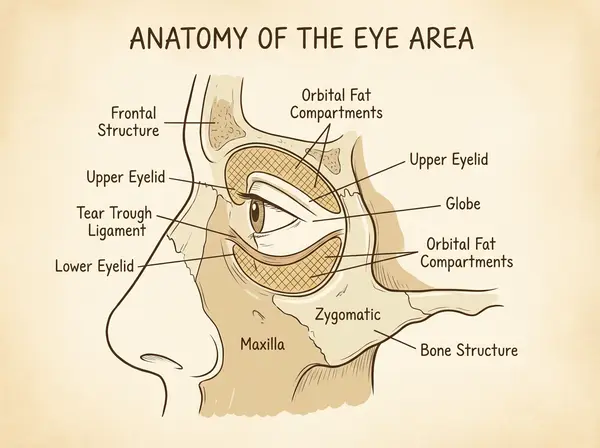
Your tear trough extends from the inner corner of your eye diagonally toward your mid-cheek. Unlike other facial areas where fat pads simply deflate with age, the under-eye region undergoes a complex transformation involving multiple tissue layers.
The orbital septum—a thin membrane holding fat compartments behind your lower lid—weakens over time. As collagen production slows (declining approximately 1% per year after age 30), this septum allows orbital fat to herniate forward, creating the appearance of “bags.” Simultaneously, the tear trough ligament tethers skin to underlying bone while surrounding soft tissue descends, deepening the hollow and creating a visible shadow. American Society of Ophthalmic Plastic and Reconstructive Surgery
Bakersfield’s intense UV exposure accelerates this process. Agricultural workers, outdoor enthusiasts, and anyone spending significant time in Central Valley sun experience faster collagen breakdown in this already-fragile area. The result: tear troughs and under-eye bags often develop earlier and more prominently than in less sun-exposed regions.
Understanding whether your concern stems from volume loss (a true hollow) or volume excess (protruding fat) determines your ideal treatment path.
When Tear Trough Filler Is Your Best Option
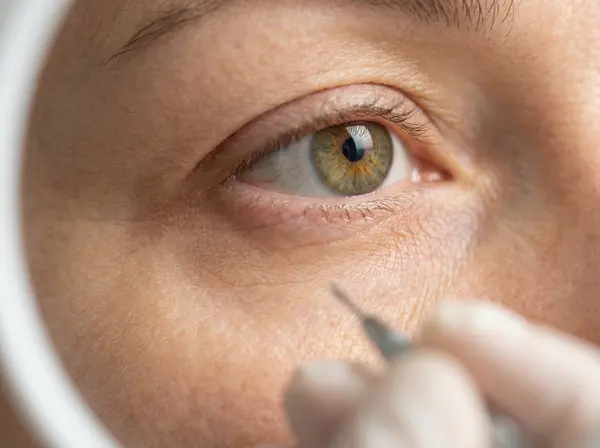
Hyaluronic acid dermal filler works beautifully for tear troughs caused by volume depletion without significant fat herniation. The right filler—placed with precision in the correct tissue plane—restores the smooth transition from lower lid to cheek, eliminating shadows and refreshing your appearance.
7 Signs You’re an Ideal Tear Trough Filler Candidate
- Visible hollow or depression beneath your lower lids that creates a shadow
- Thin or crepey under-eye skin without significant puffiness or bags
- Good skin elasticity that rebounds when gently pinched
- Age-related volume loss in mid-face creating lid-cheek junction
- No significant fat protrusion when you look down or press gently on your closed eyelid
- Realistic expectations about filler longevity (12-18 months in this area)
- Preference for non-surgical solution with minimal downtime
Dr. Chang uses premium hyaluronic acid fillers specifically formulated for the under-eye area—products with lower viscosity and higher cohesivity that integrate smoothly without creating visible lumps or the dreaded “Tyndall effect” (a bluish discoloration from improperly placed filler).
Dr. Chang’s Precision Tear Trough Filler Technique
Years of oculoplastic training inform every injection Dr. Chang performs. His approach:
1. Anatomical Mapping: Identifying your tear trough ligament, assessing fat compartments, evaluating skin thickness, and noting any asymmetry between eyes.
2. Conservative Volume Strategy: Starting with minimal product (typically 0.3-0.5ml per side) placed deeply along the orbital rim bone using a cannula technique to minimize bruising and ensure even distribution.
3. Staged Approach: Scheduling a two-week follow-up to assess integration before adding additional volume if needed—avoiding the “overfilled” appearance that betrays injectable work.
4. Integration Assessment: Ensuring filler blends seamlessly with your natural tear trough contour under various lighting conditions.
The treatment takes 20-30 minutes. Most patients experience mild swelling for 3-5 days and can return to work immediately with concealer. Results emerge fully within 7-10 days as any residual swelling resolves, revealing a refreshed, well-rested appearance that lasts 12-18 months before maintenance is needed.
When Lower Blepharoplasty Is the Right Choice
If your under-eye concern involves protruding fat creating true bags—not just hollows—filler won’t solve the problem. In fact, adding volume to an area that already has excess tissue can worsen the appearance, creating more prominence and potentially compromising lymphatic drainage.
Lower blepharoplasty surgically addresses fat herniation, excess skin, and muscle laxity that filler cannot correct.
8 Signs You Need Blepharoplasty, Not Filler
- Visible puffiness or bags that protrude beyond your lower lid margin
- Fat bulges that become more obvious when you look down
- Excess loose skin with significant wrinkles or folds
- Persistent bags present even in morning before fluid accumulation
- Dark circles caused by skin pigmentation rather than shadowing
- Lid laxity or ectropion risk (lower lid pulling away from eye)
- Previous filler complications or unsatisfactory results in tear trough area
- Desire for permanent correction rather than ongoing filler maintenance
Dr. Chang’s oculoplastic fellowship training at UCLA’s Jules Stein Eye Institute provides a crucial advantage: he doesn’t just remove fat—he reshapes and repositions it to restore youthful contours while protecting your eye function and structure.
The Modern Aesthetic Institute Blepharoplasty Approach
Transconjunctival Technique: For patients with good skin quality, Dr. Chang accesses fat pads through the inside of the lower lid, leaving no visible external scars.
Fat Repositioning: Rather than simply excising fat, Dr. Chang strategically repositions orbital fat into the tear trough hollow, achieving dual benefits—reducing bags while filling hollows.
Conservative Skin Removal: When excess skin requires removal, incisions are placed just beneath the lash line where they heal nearly invisibly.
Lid Tone Preservation: Careful surgical planning maintains proper lid position and function—critical for eye health and natural appearance.
Lower blepharoplasty takes 60-90 minutes per eye under local anesthesia with sedation. Expect 7-10 days of visible recovery (bruising, swelling) before returning to work, with final results maturing over 3-6 months. The outcome is permanent correction of fat herniation, though natural aging continues.
The Hybrid Approach: Combining Filler and Blepharoplasty
Some patients benefit from a staged combination: blepharoplasty to remove excess fat and skin, followed by strategic filler placement 3-6 months post-surgery to fine-tune contours and address any residual hollowing.
This approach is particularly effective for patients with:
- Mixed concerns: Both fat bags medially and volume loss laterally
- Asymmetric anatomy: One side requiring more volume correction than the other
- Post-surgical refinement needs: Minor contour irregularities after healing
Dr. Chang’s dual expertise in surgical oculoplastics and advanced injectables (he’s been a Top 20 national Dysport injector by volume since 2016) means he can design a comprehensive treatment plan that leverages both modalities for optimal, natural results.
How to Know Which Treatment Is Right for You
The “Look Down” Test
Stand in front of a mirror in bright, even lighting. Tilt your head back slightly and look down (without moving your head). If you see fat pads bulging beneath your lower lids, you likely need blepharoplasty. If the area simply looks hollow without protrusion, filler may be your answer.
The “Pinch Test”
Gently pinch the skin of your lower lid. If there’s significant excess skin that doesn’t snap back quickly, blepharoplasty will provide better results than filler alone.
The “Morning vs. Evening” Test
Assess your under-eyes first thing in the morning versus end of day. If puffiness significantly worsens throughout the day due to fluid retention, structural correction via surgery may be necessary.
These at-home assessments provide clues, but only a comprehensive evaluation by an oculoplastic surgeon can definitively determine your best treatment path.
Dr. Chang’s Comprehensive Under-Eye Evaluation
Your consultation at Modern Aesthetic Institute goes far beyond simply looking at your under-eyes. Dr. Chang’s oculoplastic training means he evaluates:
Eyelid Structure: Assessing lower lid tone, position, and attachment to ensure surgical safety or filler appropriateness.
Fat Compartment Analysis: Identifying which of the three lower lid fat pads are herniating and their volume.
Tear Trough Depth: Measuring the depth of your hollow and its relationship to orbital rim anatomy.
Skin Quality: Evaluating thickness, elasticity, and sun damage that impacts healing and results.
Mid-Face Volume: Assessing cheek position and volume, which directly affects tear trough appearance.
Eye Health Status: Checking tear production, ocular surface health, and any conditions (dry eye, thyroid eye disease) that impact treatment selection.
Photographic Analysis: Documenting your anatomy in multiple lighting conditions and angles to plan optimal treatment.
This thorough assessment typically takes 30-45 minutes and results in a personalized recommendation—not a sales pitch, but an honest evaluation of what will truly work for your unique anatomy.
Treatment Timeline and Recovery: What to Expect
Tear Trough Filler Timeline
- Day of treatment: 20-30 minutes, mild swelling, return home immediately
- Days 1-3: Peak swelling, bruising possible, ice compresses recommended
- Days 4-7: Swelling subsides, results begin emerging, makeup allowed
- Day 14: Follow-up assessment, additional volume if needed
- Months 12-18: Maintenance appointment to preserve results
Lower Blepharoplasty Timeline
- Day of surgery: 60-90 minutes per eye, return home same day with cold compresses
- Days 1-5: Significant swelling and bruising, head elevation, limited activity
- Days 5-7: Sutures removed (if external incisions), swelling begins improving
- Weeks 2-3: Most bruising resolved, return to work with minimal makeup
- Months 3-6: Final contour refinement as tissues settle and scars mature
- Years 10-15+: Permanent fat correction, though natural aging continues
Bakersfield Considerations for Under-Eye Treatment

Sun Protection Is Non-Negotiable
Bakersfield’s UV index regularly reaches “very high” and “extreme” levels from April through October. After any under-eye treatment—filler or surgery—sun exposure can:
- Increase pigmentation and dark circles
- Slow healing and increase inflammation
- Break down filler more quickly
- Cause hyperpigmentation along incision lines
Invest in quality sunglasses that cover the entire under-eye area and apply broad-spectrum SPF 50+ daily, reapplying every two hours when outdoors.
Agricultural Dust and Irritation
Kern County’s agricultural industry means airborne dust, pollen, and particulates are constant. Post-treatment:
- Avoid outdoor activities during windy conditions in the first week
- Keep eyes clean with preservative-free artificial tears
- Use a humidifier at night during dry summer months
- Avoid rubbing or touching the treated area
Scheduling Around Social Events
Plan tear trough filler around any major events (weddings, reunions, professional photos) with at least two weeks of buffer for swelling resolution. For blepharoplasty, allow 3-4 weeks before important occasions.
5 Essential Questions to Ask During Your Consultation
- “Based on my anatomy, which treatment addresses the root cause of my concern—filler or surgery?”
- “What are the specific risks for my eye health given my medical history?”
- “How many under-eye filler procedures and blepharoplasties do you perform annually?”
- “Can I see before-and-after photos of patients with similar anatomy to mine?”
- “What happens if I’m not satisfied with my results—what are my revision options?”
An experienced oculoplastic surgeon will answer these thoroughly without defensiveness, demonstrating both expertise and commitment to your safety.
Cost Considerations and Investment Value
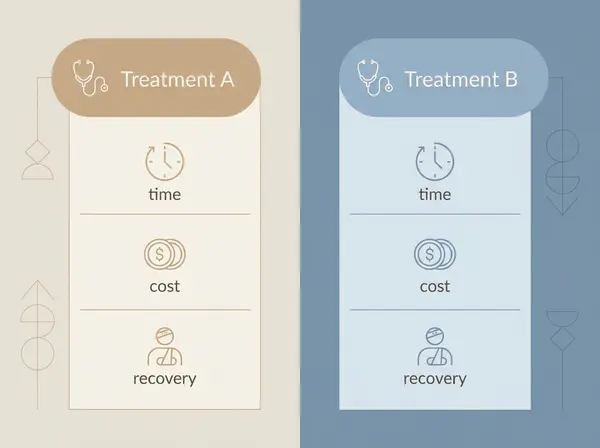
Tear Trough Filler: $800-$1,200 per treatment session, with maintenance needed every 12-18 months. Over 10 years, expect to invest $5,000-$8,000.
Lower Blepharoplasty: $4,500-$7,000 as a one-time investment with permanent fat correction. Over the same 10-year period, the per-year cost is significantly lower.
While filler requires less upfront investment, blepharoplasty often proves more cost-effective long-term for patients with true structural concerns.
Some insurance plans cover blepharoplasty if excess skin obstructs your superior visual field. Dr. Chang’s ophthalmology credentials allow him to document medical necessity and assist with insurance authorization when appropriate.
Modern Aesthetic Institute offers flexible financing through CareCredit and Cherry, making both treatments accessible to Bakersfield patients regardless of your budget.
Combining Under-Eye Treatment with Complementary Procedures
Under-eye rejuvenation rarely happens in isolation. Dr. Chang often recommends combining your tear trough or blepharoplasty treatment with:
Mid-Face Filler: Restoring cheek volume lifts tissues and reduces tear trough depth, allowing less filler in the delicate under-eye area while achieving better overall results.
Botox for Crow’s Feet: Smoothing lateral wrinkles creates a cohesive, youthful eye area without competing aesthetic concerns.
Skin Resurfacing: Chemical peels or laser treatments improve skin texture and tone, complementing structural improvements from filler or surgery.
Upper Blepharoplasty: Addressing excess upper lid skin simultaneously creates balanced, harmonious results across the entire eye region.
This comprehensive approach—treating the face as an interconnected whole rather than isolated zones—is what distinguishes truly natural results from the “done” appearance of piecemeal treatments.
Common Myths About Tear Trough Treatment
Myth #1: “Filler migration under the eyes causes permanent puffiness.”
Truth: When placed correctly in the appropriate tissue plane by an experienced injector, hyaluronic acid filler integrates into tissue and does not migrate. The “filler migration” phenomenon usually results from overfilling, incorrect product selection, or superficial placement—risks that Dr. Chang’s conservative, precise technique avoids.
Myth #2: “Blepharoplasty creates a hollow, ‘operated’ look.”
Truth: Old-school aggressive fat removal did cause this problem. Modern techniques like Dr. Chang’s fat repositioning approach preserve volume while correcting bags, resulting in natural contours that don’t betray surgical intervention.
Myth #3: “You can’t wear contacts after lower blepharoplasty.”
Truth: Properly performed lower blepharoplasty preserves lid position and function. Most patients return to contact lens wear within 2-3 weeks as healing progresses. Dr. Chang’s oculoplastic training ensures he protects your eye health throughout the process.
Myth #4: “Tear trough filler always bruises extensively.”
Truth: While bruising is possible with any injectable, using a blunt cannula technique (rather than needle injection), applying pressure, and avoiding blood-thinning medications significantly reduces this risk. Most of Dr. Chang’s patients experience minimal to no bruising.
Myth #5: “Insurance never covers blepharoplasty.”
Truth: If excess skin obstructs your superior visual field, documented through formal visual field testing, many insurance plans cover functional blepharoplasty. Dr. Chang’s ophthalmology credentials allow him to perform this testing and submit proper documentation for authorization.
Your Path to Refreshed, Natural-Looking Eyes
Tear trough hollows and under-eye bags don’t just affect how you look—they impact how you feel about yourself, how others perceive your energy and vitality, and even your professional presence in Bakersfield’s competitive work environment.
The solution isn’t complicated, but it does require expertise to diagnose correctly. Choose between filler and blepharoplasty based on your anatomy, not just your preferences. Trust a specialist who brings both surgical precision and injectable artistry to the table. And prioritize natural, age-appropriate results over dramatic transformation.
Dr. Joseph H. Chang’s unique combination of board-certified ophthalmology, oculoplastic fellowship training, and 25+ years of aesthetic experience serving Bakersfield means you receive honest guidance, precise treatment, and results that honor your natural features while turning back the clock on under-eye aging.
Schedule your comprehensive under-eye evaluation at Modern Aesthetic Institute today. Together, we’ll determine whether tear trough filler, lower blepharoplasty, or a customized combination delivers the refreshed, confident appearance you deserve.
Schedule Your Consultation at Modern Aesthetic Institute
About the Author
Dr. Joseph H. Chang is a board-certified ophthalmologist specializing in oculoplastic surgery with over 25 years of aesthetic medicine experience serving Bakersfield and Kern County. Trained at UCLA’s prestigious Jules Stein Eye Institute, Dr. Chang brings surgical precision and artistic sensibility to every injectable treatment. His recognition as a Top 20 Dysport injector nationally (by volume) since 2016 reflects his expertise and the trust patients place in his care. At Modern Aesthetic Institute, Dr. Chang’s philosophy centers on natural enhancement, patient education, and honest guidance—helping you achieve a refreshed, youthful appearance without looking “overdone.” His specialized training in oculoplastic surgery provides unique advantages for facial aesthetic treatments, combining intimate anatomical knowledge with years of refined injectable technique.
FAQ SECTION
1. Will tear trough filler make my under-eye bags worse?
If you have true fat herniation causing bags, adding filler can increase prominence and potentially worsen the appearance. This is why proper diagnosis is critical. Dr. Chang’s oculoplastic evaluation determines whether your concern is volume deficiency (ideal for filler) or volume excess (requiring blepharoplasty). Attempting to use filler to correct structural bags is like adding more pillows to an overstuffed couch—it simply doesn’t address the root problem.
2. How long does tear trough filler last compared to other facial areas?
Tear trough filler typically lasts 12-18 months—longer than lips (6-9 months) but shorter than cheeks (18-24 months). The under-eye area experiences constant movement from blinking (approximately 15,000-20,000 blinks daily) and has excellent blood flow, which gradually metabolizes hyaluronic acid. The filler doesn’t disappear suddenly; it gradually softens over time, allowing for scheduled maintenance that keeps results consistent.
3. Is lower blepharoplasty painful? What does recovery really feel like?
Most patients describe post-blepharoplasty discomfort as “tightness” or “pressure” rather than sharp pain. Over-the-counter pain relievers typically suffice. The most challenging aspects are temporary: swelling that makes you look like you’ve been crying, bruising that requires concealer for 7-10 days, and dryness requiring frequent artificial tears. By week two, most patients feel presentable with light makeup. The key is setting realistic expectations and planning time off work (7-10 days recommended).
4. Can filler dissolve if I don’t like my tear trough results?
Yes—one of the safety advantages of hyaluronic acid filler is that it can be dissolved with hyaluronidase enzyme within minutes if you’re unsatisfied. However, Dr. Chang’s conservative approach, using small volumes and staging treatments, minimizes this risk. Most patients require additional filler at their two-week follow-up rather than removal. That said, the reversibility of HA filler provides peace of mind that surgical correction cannot offer.
5. What makes Dr. Chang qualified to perform both tear trough filler and blepharoplasty?
Dr. Chang’s board certification in ophthalmology means he completed medical school, a one-year internship, and three years of ophthalmology residency—providing extensive training in eye anatomy, function, and surgery. His additional oculoplastic fellowship at UCLA’s Jules Stein Eye Institute represents another 1-2 years specializing exclusively in eyelid and facial aesthetic surgery. Combined with 25+ years performing both surgical and non-surgical treatments, he brings a level of eye-specific expertise that general plastic surgeons and injectors simply cannot match. This dual surgical-and-injectable mastery allows him to recommend the right treatment rather than defaulting to one approach.
6. How soon can I return to work after tear trough filler vs. blepharoplasty?
After tear trough filler: Most patients return to work the next day. You may have mild swelling or small bruises easily concealed with makeup. Avoid strenuous exercise for 48 hours, but normal daily activities resume immediately.
After lower blepharoplasty: Plan 7-10 days off work. You’ll have visible bruising and swelling that, while not painful, is socially noticeable. Remote work or video calls may be possible with strategic camera angles after 5-7 days, but in-person professional interactions are best delayed until week two when bruising has largely faded.
7. Can men get tear trough treatment? Will it look natural?
Absolutely. Roughly 30% of Dr. Chang’s tear trough patients are men seeking to look less tired and more alert without appearing “done.” The key is conservative volume—men’s facial anatomy typically requires less filler than women’s to achieve natural refreshment. Dr. Chang’s approach focuses on eliminating shadows while maintaining masculine facial structure, avoiding the “plump” appearance that would feminize male features. Many Bakersfield professionals—from executives to farmers—choose tear trough filler or blepharoplasty for the competitive advantage of looking well-rested and energetic.
8. Will my insurance cover lower blepharoplasty if my under-eye bags affect my vision?
Insurance typically covers upper blepharoplasty when excess skin obstructs the superior visual field—not lower blepharoplasty for bags. However, if your lower lid position or laxity threatens eye health (ectropion risk), documentation may support coverage. Dr. Chang’s ophthalmology credentials allow him to perform visual field testing, document functional impairment, and submit proper authorization requests when medical necessity exists. Even when surgery is partially cosmetic, insurance may cover the functional component, reducing your out-of-pocket cost.