
By Dr. Joseph H. Chang, MD
Ophthalmologist | Oculoplastic Specialist
Few aesthetic complications are more distressing than the blue-tinted discoloration that appears beneath the eyes after dermal filler treatment. This phenomenon—called the Tyndall effect—signals improper filler placement depth and can transform a rejuvenation treatment into a source of regret. For Bakersfield patients seeking natural under-eye improvement, understanding tissue depth, product selection, and injection technique makes the difference between seamless results and visible evidence of “work done.”
At Modern Aesthetic Institute, Dr. Joseph H. Chang’s unique background as both an ophthalmologist and fellowship-trained oculoplastic surgeon provides critical advantages in periorbital filler placement. With over 25 years serving Bakersfield and Kern County—and—Dr. Chang approaches every under-eye treatment with surgical precision, anatomical expertise, and the conservative philosophy that natural enhancement requires invisible technique.
This comprehensive guide explains the science behind the Tyndall effect, why it occurs, how proper filler placement prevents it, and what distinguishes expert injection technique from inexperienced attempts that leave visible traces beneath delicate under-eye skin.
What Is the Tyndall Effect? Understanding the Science

The Tyndall effect is an optical phenomenon first described by physicist John Tyndall in the 19th century. It occurs when light scatters as it passes through particles suspended in a transparent medium—think of how sunlight becomes visible as beams streaming through dusty air.
In aesthetic medicine, the Tyndall effect manifests as a bluish or grayish discoloration beneath the skin when hyaluronic acid filler is placed too superficially. The transparent gel particles scatter light wavelengths, with shorter blue wavelengths scattering most prominently, creating the characteristic tint that betrays poorly executed injection technique. Dermatologic Surgery Journal
Why Under-Eye Skin Is Particularly Vulnerable
The periorbital region presents unique anatomical challenges:
Skin Thickness: Under-eye skin measures just 0.5mm thick—the thinnest on the entire body and roughly four times thinner than cheek skin. This minimal tissue provides little camouflage for improperly placed filler.
Translucency: Thin skin combined with minimal subcutaneous fat creates high translucency, making anything beneath the surface—blood vessels, pigmentation, or misplaced filler—immediately visible.
Movement: Constant motion from blinking (15,000-20,000 times daily), facial expressions, and sleep positioning stresses this delicate area, potentially displacing superficially placed filler.
Vascular Density: The periorbital region contains extensive blood vessel networks. Superficial filler placement increases risk of vascular compression, lymphatic obstruction, and the blue discoloration that signals improper technique.
In Bakersfield’s intense sunlight—where UV index regularly reaches “very high” and “extreme” levels from April through October—any blue or gray discoloration becomes dramatically more noticeable in outdoor lighting, making proper placement depth absolutely critical for residents of Kern County.
The Four Tissue Layers: Where Filler Belongs (and Where It Doesn’t)
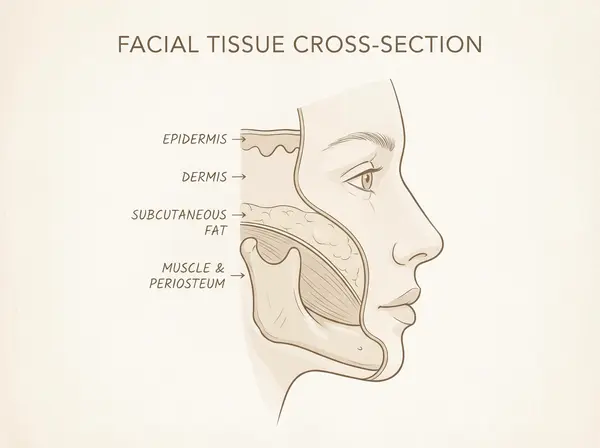
Understanding facial tissue anatomy is essential for preventing the Tyndall effect. The under-eye area consists of four distinct layers, each with specific characteristics:
Layer 1: Epidermis (Outermost Layer)
The thin outer skin layer provides barrier protection but offers no structural support. Filler should never be placed here—it would be immediately visible and create texture irregularities.
Layer 2: Dermis
The dermis contains collagen, elastin, blood vessels, and nerve endings. It’s divided into superficial (papillary) and deep (reticular) layers. Placing filler in the superficial dermis causes the Tyndall effect—the filler is too close to the surface, scattering light and creating blue discoloration.
Layer 3: Subcutaneous Fat
Below the dermis lies a thin layer of subcutaneous fat. In the tear trough area, this layer is minimal or absent entirely. Some filler products can be placed in the deeper subcutaneous plane, but this requires careful assessment of your individual anatomy.
Layer 4: Deep Structural Plane (Supraperiosteal)
The deepest safe injection plane sits directly on the orbital rim bone (periosteum), beneath all soft tissue layers. This is the ideal placement depth for tear trough filler in most patients. At this depth, filler:
- Remains invisible beneath overlying tissue
- Provides structural support from the foundation upward
- Minimizes risk of visible lumps or discoloration
- Reduces vascular compression risk
- Creates natural-looking volume restoration
Dr. Chang’s oculoplastic training provides intimate familiarity with these tissue planes—knowledge that general injectors, even experienced ones, may lack without surgical experience in the periorbital region.
Why Improper Filler Placement Happens: Common Injector Mistakes
Even experienced injectors can inadvertently create the Tyndall effect if they lack specific training in periorbital anatomy. Common errors include:
1. Insufficient Anatomical Knowledge
The under-eye area differs dramatically from other facial zones. Techniques that work beautifully in lips, cheeks, or nasolabial folds prove disastrous beneath the eyes. Injectors without surgical training may not fully understand the tissue plane distinctions that prevent complications.
2. Wrong Product Selection
Not all hyaluronic acid fillers are appropriate for the tear trough. Products designed for deep volume replacement or structural support—excellent in cheeks or jawline—are far too viscous for the delicate under-eye area. Using the wrong product, even with correct technique, increases Tyndall effect risk.
3. Superficial Placement for “Safety”
Some injectors, fearful of going too deep and encountering blood vessels, place filler superficially in what they perceive as a “safer” plane. This misguided approach actually increases complication risk while simultaneously creating visible discoloration.
4. Lack of Cannula Proficiency
Needle injection in the tear trough requires extreme precision and carries higher bruising and vascular risk. Cannula technique—using a blunt-tipped instrument that glides beneath tissue rather than puncturing through it—offers superior safety and results, but requires specialized training many injectors haven’t completed.
5. Overfilling
The delicate under-eye area tolerates only small filler volumes. Attempting to achieve dramatic transformation in a single session inevitably leads to overfilling, which causes both Tyndall effect and an unnatural, puffy appearance.
Dr. Chang’s Precision Approach: Preventing the Tyndall Effect
Dr. Chang’s methodology combines surgical knowledge, conservative product selection, and advanced technique to eliminate Tyndall effect risk while delivering natural rejuvenation.
Comprehensive Pre-Treatment Assessment

Every tear trough evaluation begins with detailed analysis:
Skin Quality Evaluation: Measuring skin thickness, assessing elasticity, and noting sun damage that affects how tissue responds to filler.
Anatomical Mapping: Identifying your tear trough ligament position, orbital rim bone landmarks, fat compartment locations, and vascular anatomy.
Volume Loss Pattern: Determining whether hollowing is localized to the medial tear trough or extends laterally toward the mid-face.
Lighting Assessment: Examining your under-eye area in multiple lighting conditions to understand how shadows fall and predict treatment outcomes.
Previous Treatment Review: If you’ve had prior under-eye filler, assessing placement depth, product type, and any complications to inform current treatment planning.
This thorough assessment typically takes 20-30 minutes—far longer than many practices allocate—but it’s essential for achieving results that look natural rather than “done.”
Strategic Product Selection
Dr. Chang selects hyaluronic acid fillers specifically formulated for the delicate periorbital area:
Low-Viscosity Products: Softer, more pliable fillers that integrate smoothly into tissue without creating visible edges or lumps.
High Cohesivity: Products that maintain their structure without migrating or spreading unpredictably.
Optimal Hydrophilic Balance: Fillers that attract appropriate moisture levels without causing excessive swelling—critical in the tear trough where even minor swelling appears dramatically.
Products meeting these criteria include specialized formulations from the Restylane and Juvéderm families designed explicitly for tear trough augmentation. Using the correct product is as important as technique in preventing the Tyndall effect.
Supraperiosteal Cannula Technique
Dr. Chang’s injection methodology prioritizes safety and natural results:
Single Entry Point: Creating one small entry point at the lateral tear trough rather than multiple puncture sites that increase bruising risk.
Blunt Cannula Advancement: Using a flexible, blunt-tipped cannula that glides beneath tissue along the orbital rim bone, placing filler in the deepest safe plane.
Incremental Placement: Depositing tiny amounts of filler (0.1ml increments) while continuously assessing contour changes and maintaining symmetry.
Immediate Massage: Gently molding filler into optimal position before it begins integrating into tissue.
Conservative Volume: Limiting initial treatment to 0.3-0.5ml per side, with the understanding that additional volume can be added at a two-week follow-up if needed.
This approach eliminates Tyndall effect risk by ensuring filler remains deep beneath all visible tissue layers, creating natural volume restoration that’s felt more than seen.
What to Do If You Already Have the Tyndall Effect
If you’ve received under-eye filler elsewhere and developed blue or gray discoloration, options exist for correction:
Hyaluronidase Dissolution
Hyaluronic acid filler can be dissolved using hyaluronidase enzyme, which breaks down HA within hours. The procedure involves:
- Precise injection of hyaluronidase into the discolored area
- Waiting 24-48 hours for enzyme activity to dissolve filler
- Assessing results and repeating if necessary
- Waiting 2-4 weeks before considering re-treatment with proper technique
Dr. Chang’s experience with both placing and correcting under-eye filler allows him to strategically dissolve only the problematic superficial product while preserving any appropriately placed deeper filler.
Time and Patience
Hyaluronic acid filler gradually metabolizes naturally over 12-18 months. If discoloration is mild and doesn’t significantly bother you, simply waiting for natural dissolution is a valid option.
Correction Without Complete Removal
In some cases, Dr. Chang can improve Tyndall effect appearance by strategically adding filler in the correct deep plane, which lifts superficial product slightly deeper and reduces light scatter. This technique requires expert judgment to avoid worsening the problem.
7 Red Flags That Suggest Your Injector May Not Understand Under-Eye Anatomy
Protect yourself from Tyndall effect and other complications by recognizing warning signs during consultation:
- Dismisses Your Concerns: If you ask about Tyndall effect risk and your injector minimizes it or seems unfamiliar with the term, that’s a red flag.
- Doesn’t Discuss Tissue Depth: Expert injectors explain where they’ll place filler and why—if this conversation doesn’t happen, technique may be superficial.
- Uses Needle-Only Technique: While some experienced injectors successfully use needles for tear troughs, cannula technique generally offers superior safety for this high-risk area.
- Promises Immediate Dramatic Results: The tear trough requires conservative, staged treatment—promises of immediate dramatic transformation suggest overfilling risk.
- Doesn’t Mention Product Selection: If your injector doesn’t discuss which filler they’ll use and why it’s appropriate for under-eye treatment, they may lack specialized knowledge.
- Rushes Through Consultation: Proper under-eye assessment takes time—a five-minute consultation followed by immediate treatment suggests inadequate planning.
- Lacks Surgical or Ophthalmologic Training: While many excellent injectors lack surgical backgrounds, the complex anatomy and high complication risk in the periorbital area make oculoplastic expertise a significant advantage.
The Role of Lighting in Tyndall Effect Visibility

Bakersfield’s bright outdoor environment dramatically affects how under-eye filler appears. Understanding lighting’s role helps set realistic expectations:
Indoor Lighting (Most Forgiving)
Soft, diffused indoor lighting minimizes shadows and reduces visibility of both natural tear trough hollows and any mild Tyndall effect. This is why clinic mirror assessment may look better than outdoor appearance.
Outdoor Natural Light (Most Revealing)
Bright sunlight—abundant in Kern County—casts sharp shadows that emphasize any contour irregularity or discoloration. Central Valley residents spend significant time outdoors for work, recreation, and daily activities, making natural outdoor appearance the most important assessment criterion.
Photography and Social Media
Flash photography and ring lights can dramatically reveal Tyndall effect that’s barely visible to the naked eye. In our social-media-driven culture, how you photograph matters as much as how you appear in person.
Dr. Chang evaluates your under-eye area in multiple lighting conditions during consultation specifically to predict how results will appear in your real-world environment—not just under forgiving clinic lights.
Alternative Approaches When Filler Isn’t the Answer
Not every patient with tear trough hollows is an appropriate filler candidate. Dr. Chang’s surgical training allows him to recognize when alternative treatments provide better outcomes:
Lower Blepharoplasty with Fat Repositioning
If you have both under-eye bags (protruding fat) and tear trough hollows, surgical fat repositioning addresses both concerns simultaneously—removing excess fat from bags while repositioning it into the hollow, eliminating the need for filler entirely.
Skin Resurfacing
When dark circles result primarily from skin pigmentation or texture rather than shadowing, laser treatment or chemical peels improve appearance more effectively than filler.
Combination Treatment Staging
Some patients benefit from staged treatment: addressing mid-face volume loss first (lifting cheek tissues), then reassessing the tear trough to determine if any filler is still needed—often less product is required after restoring superior support structures.
Acceptance and Reframing
Not all tear trough hollows require treatment. Dr. Chang’s conservative philosophy includes honest conversations about when intervention may carry risks that outweigh benefits—particularly for very young patients with minimal volume loss or those with anatomical factors that increase complication risk.
Recovery and What to Expect After Expert Tear Trough Filler
When filler is placed correctly in the deep supraperiosteal plane using proper technique and products, recovery is remarkably mild:
Immediate Post-Treatment (Day 1-2)
- Mild swelling and possible small bruises at the entry point
- Slight fullness that may feel unusual but shouldn’t look dramatically different
- Possible asymmetry as one side swells slightly more than the other initially
- Instructions to keep head elevated, apply cold compresses, and avoid strenuous activity
Early Integration (Days 3-7)
- Swelling diminishes significantly, revealing emerging results
- Any bruising fades (easily concealed with makeup)
- Filler begins integrating into tissue
- Normal daily activities resume, including work and light exercise
Full Result Emergence (Days 7-14)
- Swelling fully resolves
- Final contour becomes apparent
- Two-week follow-up assessment to determine if additional refinement is needed
- Makeup application returns to normal
Long-Term Maintenance (12-18 Months)
- Results remain stable for 12-18 months before gradual filler metabolism
- No visible lumps, bumps, or discoloration if properly placed
- Natural appearance that doesn’t reveal injectable treatment
- Maintenance appointment scheduled before complete filler dissolution to preserve consistent results
The key difference between expert and inexpert tear trough treatment isn’t just avoiding complications—it’s achieving results so seamless that even you forget you’ve had filler.
Bakersfield-Specific Considerations for Under-Eye Filler
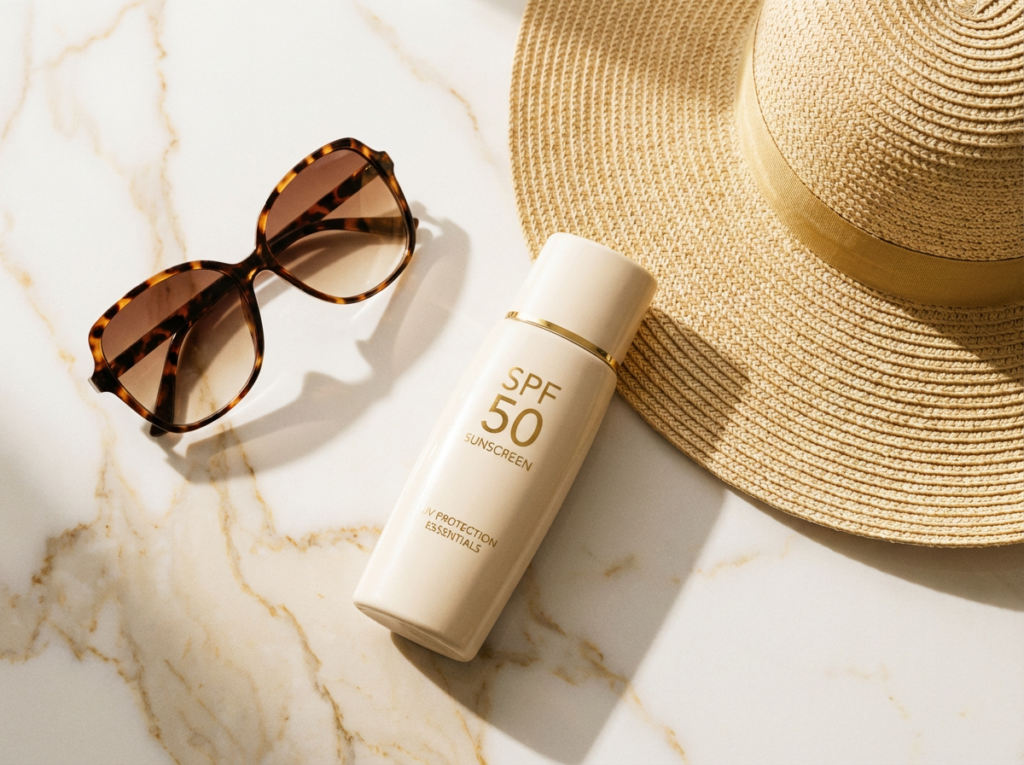
UV Protection Is Essential
Kern County’s intense sun exposure increases inflammation risk post-treatment and accelerates filler breakdown. After tear trough filler:
- Wear wraparound sunglasses that cover the entire under-eye area
- Apply broad-spectrum SPF 50+ daily, reapplying every two hours outdoors
- Consider UV-protective wide-brim hats during peak sun hours (10am-4pm)
- Avoid direct sun exposure for the first week post-treatment
Agricultural Environment Factors
Bakersfield’s agricultural dust and airborne particulates can irritate healing tissue:
- Keep the treatment area clean with gentle cleansing
- Avoid touching or rubbing your eyes
- Use preservative-free artificial tears if eyes feel dry or irritated
- Consider indoor activities for the first 2-3 days post-treatment during windy conditions
Scheduling Around Events
Plan tear trough filler with adequate buffer time before important occasions:
- 2 weeks before professional photos, weddings, or reunions
- 3-4 weeks if you’re particularly concerned about even minor residual swelling
- Avoid scheduling immediately before extended outdoor events (concerts, festivals, sporting events)
The Investment: Cost and Value of Expert Tear Trough Treatment
Expert Tear Trough Filler: $800-$1,200 per treatment session
This investment reflects not just the product cost but the specialized expertise, time, and precision required for safe, natural results in this high-risk area.
Why expert treatment costs more than general filler:
- Specialized Training: Oculoplastic expertise that ensures anatomical knowledge
- Premium Products: Fillers specifically formulated for delicate under-eye tissue
- Advanced Technique: Cannula methodology and supraperiosteal placement
- Extended Appointment Time: Comprehensive assessment and precise injection (45-60 minutes total)
- Follow-Up Care: Two-week assessment included and touchup if needed
- Complication Management: Immediate access to correction if any concerns arise
Attempting to save money by choosing a less experienced injector often results in paying twice—first for the initial treatment, then for hyaluronidase dissolution and correction by an expert. The under-eye area is not where you want to prioritize cost savings over expertise.
Modern Aesthetic Institute offers financing through CareCredit and Cherry, making expert treatment accessible regardless of your budget.
Questions to Ask During Your Tear Trough Consultation
Protect yourself and ensure expert treatment by asking:
- “Where exactly will you place the filler—which tissue plane?” (The answer should be “supraperiosteal” or “along the orbital bone”)
- “Will you use a needle or cannula technique?” (Cannula offers advantages for most patients)
- “Which specific filler product will you use and why?” (Should be a low-viscosity HA filler designed for tear troughs)
- “How many tear trough filler treatments do you perform annually?” (Higher volume suggests more experience)
- “What’s your complication rate, and how do you manage Tyndall effect if it occurs?” (Honest injectors discuss risks and solutions)
- “Can I see before-and-after photos of patients with similar anatomy?” (Evidence of natural results in patients like you)
- “What’s your training background in periorbital anatomy?” (Oculoplastic, ophthalmic, or facial plastic surgery training is ideal)
An experienced, confident injector welcomes these questions and answers thoroughly without defensiveness.
When Tear Trough Filler Isn’t Right for You
Dr. Chang may recommend against tear trough filler if you have:
- Very thin skin with minimal subcutaneous tissue (high Tyndall risk despite expert technique)
- Significant under-eye bags with fat herniation (filler worsens appearance; surgery is better)
- Active infection or inflammation in the treatment area (delay until resolved)
- Unrealistic expectations (expecting dramatic transformation from conservative treatment)
- History of severe allergic reactions to HA products (rare but contraindicating)
- Recent lower blepharoplasty (wait 6-12 months for complete healing before adding filler)
Honest guidance about when not to treat demonstrates a provider’s commitment to your best interests rather than maximizing procedure volume.
The Modern Aesthetic Institute Difference
What distinguishes Dr. Chang’s approach to tear trough treatment from standard injectable practices:
Dual Expertise: training in ophthalmology plus oculoplastic fellowship training provides anatomical knowledge that general aesthetic providers cannot match.
Surgical Perspective: Ability to recognize when filler addresses your concern versus when surgical correction provides superior results—and the training to offer both.
Conservative Philosophy: Prioritizing subtle, natural enhancement over dramatic transformation, understanding that less often achieves more aesthetically pleasing results.
Top-Tier Injector Status: Dr. Chang’s 25+ years of injectable experience reflects both expertise and patient trust built over decades.
Comprehensive Care: Integrating tear trough treatment into overall facial assessment, ensuring harmony with your other features rather than treating the under-eye area in isolation.
Local Commitment: Over 25 years serving Bakersfield and Kern County, building relationships based on honest communication and consistent results.
Your under-eye area is too delicate and too visible to trust to inexperienced hands. Expert placement prevents complications, delivers natural results, and provides the peace of mind that comes from working with a specialist who truly understands the anatomy.
Schedule Your Tear Trough Consultation at Modern Aesthetic Institute
About the Author
Dr. Joseph H. Chang is an ophthalmologist specializing in oculoplastic surgery with over 25 years of aesthetic medicine experience serving Bakersfield and Kern County. Trained at UCLA’s prestigious Jules Stein Eye Institute, Dr. Chang brings surgical precision and artistic sensibility to every injectable treatment. His 25+ years of injectable experience reflects his expertise and the trust patients place in his care. At Modern Aesthetic Institute, Dr. Chang’s philosophy centers on natural enhancement, patient education, and honest guidance—helping you achieve a refreshed, youthful appearance without looking “overdone.” His specialized training in oculoplastic surgery provides unique advantages for facial aesthetic treatments, combining intimate anatomical knowledge with years of refined injectable technique.
FAQ SECTION
1. What exactly causes the blue tint from tear trough filler?
The blue discoloration—called the Tyndall effect—occurs when hyaluronic acid filler is placed too superficially beneath thin under-eye skin. Light passing through the skin scatters as it hits the filler particles, with shorter blue wavelengths scattering most prominently. This is the same optical phenomenon that makes the sky appear blue. The solution is placing filler deep enough (on the bone) that overlying tissue camouflages it completely. Dr. Chang’s supraperiosteal cannula technique eliminates this risk by ensuring filler remains beneath all visible tissue layers.
2. Can the Tyndall effect be reversed if I already have it?
Yes, the Tyndall effect can be corrected using hyaluronidase enzyme, which dissolves hyaluronic acid filler within 24-48 hours. Dr. Chang precisely injects hyaluronidase into the discolored area to break down superficially placed product. In some cases, partial dissolution followed by proper re-treatment in the correct deep plane achieves better results than complete removal. The key is working with an injector who has extensive experience with both placing and correcting under-eye filler—Dr. Chang’s oculoplastic training provides this expertise.
3. How do I know if my injector is placing filler deep enough?
During consultation, ask explicitly: “Which tissue plane will you inject—and why?” The correct answer is “supraperiosteal plane along the orbital rim bone” or similar anatomically specific terminology. If your injector gives vague answers, doesn’t discuss depth, or can’t explain their technique, that’s a significant red flag. Additionally, expert injectors use cannula technique for tear troughs, create only one entry point, and use very small volumes (0.3-0.5ml per side initially). If your provider doesn’t follow these protocols, consider seeking a specialist with more extensive periorbital training.
4. Is tear trough filler painful?
Discomfort during tear trough filler is typically minimal. Dr. Chang applies topical numbing cream before treatment, and the cannula technique (using a blunt-tipped instrument) causes significantly less discomfort than needle injection. Most patients describe the sensation as “pressure” or “fullness” rather than sharp pain. The under-eye area is sensitive, but proper technique and adequate numbing make the experience tolerable for even anxious patients. Post-treatment, there’s typically no pain—just mild swelling and possible bruising that resolves within a week.
5. How long does properly placed tear trough filler last?
Tear trough filler typically lasts 12-18 months when placed correctly in the deep supraperiosteal plane—longer than lip filler (6-9 months) but slightly shorter than cheek filler (18-24+ months). The under-eye area experiences constant movement from blinking and facial expressions, which gradually metabolizes hyaluronic acid. Filler doesn’t disappear suddenly; it softens gradually over time. Dr. Chang recommends maintenance appointments around 14-16 months to preserve consistent results before complete product metabolism. Factors like metabolism speed, lifestyle, and sun exposure affect individual longevity.
6. Why does Dr. Chang’s oculoplastic training matter for filler?
Dr. Chang’s training in ophthalmology required three years of residency focused exclusively on eye anatomy, function, and surgery. His additional oculoplastic fellowship at UCLA’s Jules Stein Eye Institute represents another 1-2 years specializing in eyelid and periorbital surgery. This training provides intimate knowledge of the delicate tissue planes, vascular anatomy, and structural relationships in the under-eye area—expertise that general aesthetic injectors, even highly experienced ones, typically lack without surgical training. This anatomical mastery is why Dr. Chang can safely place filler in the optimal deep plane, recognize when surgery provides better outcomes than filler, and manage complications if they occur.
7. Can tear trough filler migrate or move after placement?
When placed correctly in the supraperiosteal plane by an expert injector, hyaluronic acid filler integrates into surrounding tissue and does not migrate significantly. The “filler migration” problem usually results from superficial placement (in the dermis or superficial subcutaneous layer) or overfilling, which creates volume that has nowhere to disperse except laterally. Dr. Chang’s conservative volume approach and deep placement technique eliminate migration risk. Properly placed filler stays exactly where it’s positioned, creating stable, natural-looking results that don’t shift or distort over time.
8. What should I avoid after tear trough filler to prevent complications?
For the first 48 hours post-treatment, avoid:
- Strenuous exercise or activities that increase facial blood flow
- Lying completely flat (keep head elevated, even during sleep)
- Touching, rubbing, or massaging the treatment area
- Alcohol consumption (increases bruising and swelling)
- Blood-thinning medications or supplements (unless medically necessary)
- Excessive sun exposure or heat (saunas, hot yoga)
- Dental work or facial treatments
After 48 hours, gradually resume normal activities. Avoid aggressive facial massage or deep facials for two weeks. Use gentle skincare and apply SPF 50+ daily. Attend your two-week follow-up for assessment and potential refinement. Most importantly, contact Dr. Chang immediately if you experience severe pain, vision changes, skin blanching, or any concerning symptoms—though these complications are extremely rare with proper technique.