
By Dr. Joseph H. Chang, MD
Board-Certified Ophthalmologist | Oculoplastic Specialist
Dark circles beneath the eyes rank among the most common aesthetic complaints across all ages, genders, and ethnicities. Yet “dark circles” is actually an umbrella term encompassing several distinct anatomical conditions—each requiring different treatment approaches. The most frequently misunderstood cause isn’t pigmentation or poor sleep, but rather structural volume loss that creates shadowing. These under-eye hollows cast shadows that appear as darkness, making you look perpetually exhausted regardless of how well-rested you actually feel.
In Bakersfield’s bright Central Valley sunlight—where natural lighting reveals every facial contour with unforgiving clarity—under-eye hollows and the shadows they create become particularly noticeable. Whether you’re an agricultural professional spending long days outdoors, a business executive navigating client meetings, or simply someone frustrated by looking tired when you feel energetic, understanding the true cause of your dark circles is the first step toward effective treatment.
At Modern Aesthetic Institute, Dr. Joseph H. Chang’s specialized training as a board-certified ophthalmologist and fellowship-trained oculoplastic surgeon from UCLA’s Jules Stein Eye Institute provides unique advantages in diagnosing and treating periorbital concerns. With over 25 years serving Bakersfield and Kern County—plus recognition as a Top 20 national Dysport injector by volume since 2016—Dr. Chang brings both surgical anatomical knowledge and advanced injectable expertise to under-eye rejuvenation.
This comprehensive guide explains why under-eye hollows develop, how they differ from other dark circle causes, when dermal filler provides the solution, and what distinguishes expert tear trough treatment from the complications that result from inexperienced injection in this delicate, high-risk area.
Understanding Under-Eye Anatomy: The Architecture of Hollows and Shadows
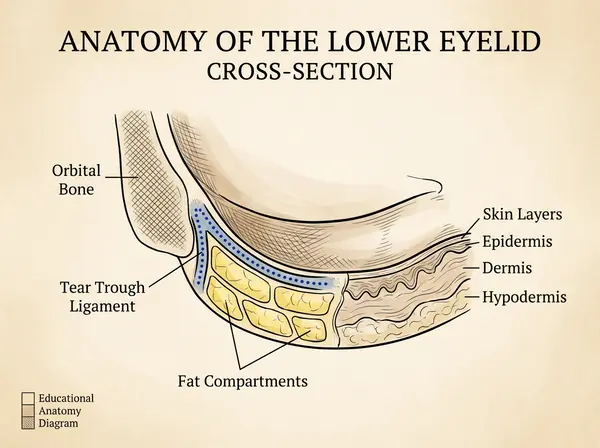
Your under-eye area features remarkably thin skin—measuring approximately 0.5mm thick, roughly four times thinner than cheek skin. This translucency makes the periorbital region uniquely vulnerable to visible aging changes that remain hidden in other facial areas.
The youthful under-eye demonstrates:
Smooth Lid-Cheek Transition
In youth, the area beneath your lower eyelid transitions seamlessly into your upper cheek without visible demarcation, depression, or shadowing. Fat compartments sit in their original positions, soft tissue maintains volume, and skin drapes smoothly over underlying structures.
Adequate Soft Tissue Volume
Multiple fat compartments cushion the space between your eyeball (within the bony orbit) and the overlying skin. These fat pads—combined with healthy bone structure—create gentle convexity rather than concavity.
Strong Bone Foundation
Your orbital rim (the bony edge of your eye socket) sits high and prominent in youth, providing structural support for overlying soft tissue. The infraorbital region (the bone just below your eye) maintains adequate height and volume.
Minimal Visible Vasculature
While blood vessels exist beneath under-eye skin, adequate soft tissue volume and good skin quality prevent them from showing through as blue or purple discoloration.
With aging, multiple processes compromise this youthful architecture:
Bone Resorption: Your orbital rim loses height and volume, receding backward and downward. This bone loss—beginning as early as your 30s and accelerating through your 40s-50s—removes the scaffold that once supported soft tissue. American Society of Ophthalmic Plastic and Reconstructive Surgery
Fat Atrophy: Deep orbital fat compartments deflate, losing volume that once filled the space beneath your eyes. Some fat also descends with gravity, creating bags lower while leaving hollows above.
Ligament Tethering: The tear trough ligament—which attaches skin to underlying bone—becomes more prominent as surrounding tissue loses volume, creating a visible groove.
Skin Quality Decline: Collagen and elastin breakdown (accelerated by UV exposure in Bakersfield’s intense sun) reduces skin thickness and elasticity, making underlying structures more visible.
Increased Vascularity Visibility: As soft tissue thins, blood vessels beneath the skin show through more prominently, contributing to bluish or purple tones.
The result: a hollow beneath your lower eyelid that creates a shadow—this shadow appears as a dark circle even though no pigmentation exists.
The Four Types of Dark Circles: Identifying Your Specific Cause
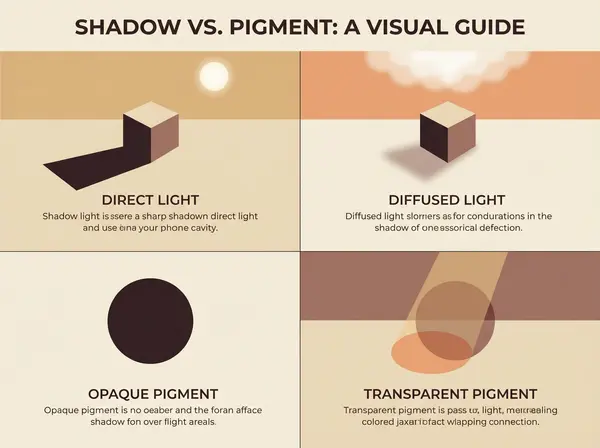
Not all dark circles result from the same anatomical issue. Accurate diagnosis determines which treatment will actually help:
1. Shadowing Dark Circles (Volume Loss)
Cause: Hollowing beneath the lower eyelid creates a depression that casts a shadow, appearing as darkness.
Characteristics:
- Darkness worse in overhead lighting or bright sunlight
- Improves when you pull down gently on your lower eyelid (lifting the shadow)
- Often accompanied by visible tear trough groove
- Darkness may extend diagonally from inner corner toward mid-cheek
- No actual skin discoloration—it’s purely shadow
Treatment: Dermal filler to restore lost volume and eliminate the depression—this is what Dr. Chang’s tear trough filler addresses.
2. Pigmented Dark Circles (Melanin)
Cause: Excess melanin production in the skin itself creates brownish discoloration.
Characteristics:
- Brown or tan color rather than blue, purple, or grey
- Consistent appearance in all lighting conditions
- Doesn’t improve when you pull down on your eyelid
- More common in darker skin tones (Hispanic, Asian, Mediterranean, African descent)
- Often worsens with sun exposure
Treatment: Topical brightening agents (vitamin C, hydroquinone, retinoids), chemical peels, or laser treatments—NOT filler.
3. Vascular Dark Circles (Blood Vessel Visibility)
Cause: Thin skin allows underlying blood vessels to show through, creating blue or purple tones.
Characteristics:
- Blue, purple, or reddish color
- May worsen with allergies, congestion, or lack of sleep (increased blood flow)
- Improves temporarily with cold compresses
- Common in very fair skin
- Often hereditary
Treatment: Skin thickening (retinoids, fillers can help indirectly), color-correcting concealers, occasionally laser—filler may provide modest improvement but isn’t primary solution.
4. Mixed Dark Circles (Combination)
Cause: Multiple factors contributing simultaneously—volume loss creating shadows PLUS pigmentation or vascularity.
Characteristics: Features of two or more types above
Treatment: Combination approach addressing each component—may include filler for volume, topicals for pigmentation, etc.
Dr. Chang’s comprehensive evaluation identifies which type(s) of dark circles you have, ensuring recommended treatments address your actual anatomical issues rather than pursuing ineffective interventions.
Why Bakersfield Residents Develop Under-Eye Hollows Earlier
Central Valley environmental factors accelerate periorbital aging:
Extreme UV Exposure
Bakersfield’s UV index regularly reaches 9-11+ (very high to extreme) from April through October. This intense sun exposure:
- Breaks down collagen and elastin in delicate under-eye skin faster than less sunny regions
- Accelerates bone resorption through systemic effects on bone metabolism
- Increases pigmentation (contributing to mixed-type dark circles)
- Creates photodamage that thins skin, making vessels more visible
Outdoor workers—agriculture, construction, utilities, law enforcement—often develop under-eye hollows in their late 30s rather than mid-40s due to cumulative UV exposure.
Low Humidity and Dehydration
Central Valley humidity often drops to 15-25%, particularly during summer. Chronic low humidity:
- Dehydrates skin, reducing thickness and elasticity
- Impairs skin barrier function
- Makes fine lines and hollows more visible
- Contributes to premature aging of periorbital tissue
Allergen and Dust Exposure
Agricultural dust, pollen, and airborne particulates trigger:
- Chronic eye rubbing (mechanically stretching delicate skin)
- Histamine release causing inflammation
- Fluid retention and puffiness that stretches skin over time
- Vascular congestion contributing to vascular dark circles
Understanding these regional factors allows Dr. Chang to develop treatment plans addressing both structural volume loss and environmental protection strategies specific to Bakersfield lifestyle.
How Under-Eye Filler Corrects Shadowing Dark Circles
For patients with structural volume loss creating shadows (the most common cause of dark circles), dermal filler offers dramatic improvement:
Volume Restoration
Hyaluronic acid filler placed precisely in the tear trough region fills the hollow, restoring the smooth transition from lower eyelid to cheek that existed in youth. By eliminating the depression, you eliminate the shadow it casts—and thus the appearance of darkness.
Light Reflection Changes
Restoring volume changes how light reflects off your under-eye area. Instead of light falling into a hollow and creating shadow, it reflects off a smooth surface, creating brighter appearance.
Skin Quality Improvement
Hyaluronic acid is hydrophilic (attracts water). When placed beneath the skin, it provides hydration and subtle skin thickening, improving texture and reducing visibility of vessels—addressing multiple dark circle contributors simultaneously.
Long-Lasting Results
Unlike concealer that washes off, tear trough filler provides 12-18 months of improvement—essentially “permanent” makeup that survives swimming, sweating, sleeping, and Bakersfield’s outdoor lifestyle.
The key: filler only works for shadowing dark circles caused by volume loss. If your darkness stems primarily from pigmentation or vascularity, filler won’t provide the improvement you seek—accurate diagnosis before treatment prevents disappointment and wasted investment.
The Ideal Under-Eye Filler Candidate: Is This Right for You?
You’re likely an excellent candidate for under-eye filler if you have:
7 Signs You’ll Benefit from Tear Trough Filler
- Visible Hollow or Depression: A groove beneath your lower eyelid, particularly evident from the inner corner extending diagonally.
- Shadow That Changes with Lighting: Darkness appears worse in overhead lighting, bright sun, or harsh bathroom lights but improves in soft, diffused lighting.
- Good Skin Elasticity: When you gently pinch lower eyelid skin, it rebounds relatively quickly rather than remaining creased.
- Minimal Under-Eye Bags: You don’t have significant puffiness or protruding fat—just hollowing. (Filler worsens appearance when bags are present.)
- Appropriate Expectations: You understand filler creates improvement, not perfection, and you’re seeking natural refreshment rather than dramatic transformation.
- No Active Eye Conditions: You don’t have dry eye syndrome, chronic infections, or inflammatory conditions that complicate healing.
- Lifestyle Compatibility: You’re willing to protect results with sun protection, adequate hydration, and avoiding behaviors that accelerate aging.
What Under-Eye Filler Cannot Fix
Equally important is recognizing when filler won’t deliver desired results:
Filler Is NOT the Answer For:
Significant Under-Eye Bags: Protruding fat creates bags; adding filler increases volume and worsens appearance. You need fat removal or repositioning, not addition.
Primarily Pigmented Dark Circles: Brown discoloration from melanin requires topical treatments or laser, not filler.
Severe Skin Laxity: Excess loose, crepey skin needs tightening, not volume—filler may create lumps or irregular texture.
Bluish Discoloration from Vessels: While filler may provide modest improvement by thickening skin, it’s not the primary solution for purely vascular dark circles.
Unrealistic Expectations: Filler creates subtle-to-moderate improvement. If you expect complete elimination of all under-eye darkness, you’ll likely be disappointed.
Dr. Chang’s honest pre-treatment assessment ensures you pursue treatments that actually address your specific anatomy rather than procedures that can’t solve your problem.
Dr. Chang’s Expert Under-Eye Filler Technique
Tear trough filler is among the most technically challenging injectable procedures—the area’s delicate anatomy, thin skin, and proximity to important structures create significant complication risk when performed by inexperienced injectors. Dr. Chang’s approach prioritizes safety and natural results:
Comprehensive Pre-Treatment Evaluation
Every under-eye assessment includes:
Dark Circle Type Identification: Determining whether your darkness results from volume loss, pigmentation, vascularity, or combination.
Anatomical Mapping: Identifying your tear trough ligament position, fat compartment locations, and blood vessel patterns.
Skin Quality Assessment: Evaluating thickness, elasticity, and texture to predict how your tissue will respond to filler.
Eyelid Function Testing: Ensuring lower lid position and tone are appropriate—laxity increases complication risk.
Medical History Review: Screening for conditions that affect healing or increase adverse event risk.
Photographic Documentation: Multiple angles and lighting conditions to assess shadows objectively.
Product Selection
Dr. Chang uses specialized, low-viscosity hyaluronic acid fillers specifically formulated for delicate under-eye tissue:
- Lower particle size: Integrates smoothly without visible lumps
- High cohesivity: Maintains position without migrating
- Optimal hydrophilic balance: Attracts appropriate moisture without excessive swelling
Products like Restylane-L or Belotero Balance meet these criteria—robust fillers designed for cheeks or jawline are inappropriate for under-eye use.
Supraperiosteal Cannula Placement
Dr. Chang’s injection technique minimizes bruising and maximizes safety:
Single Entry Point: One small entry point at the lateral tear trough rather than multiple punctures.
Blunt Cannula: Using a flexible, blunt-tipped cannula that glides beneath tissue along the bone, placing filler in the deepest safe plane (supraperiosteal—directly on the orbital rim bone).
Minimal Volume: Starting conservatively (typically 0.3-0.5ml per side), understanding that additional filler can be added at follow-up but overfilling is difficult to correct.
Continuous Assessment: Evaluating contour changes from multiple angles during injection to ensure symmetry and appropriate volume.
Immediate Massage: Gently molding filler into optimal position before it begins integrating.
This technique—informed by Dr. Chang’s oculoplastic surgical training—places filler deep enough to avoid visibility but precisely positioned to eliminate hollowing.
Staged Treatment Philosophy
Rather than attempting complete correction in one session, Dr. Chang recommends:
- Initial Treatment: Conservative volume establishing improved contour
- Two-Week Assessment: Evaluating results after swelling resolves and tissue settles
- Optional Refinement: Adding small additional volume if more correction is desired
This staged approach prevents the overfilled, puffy appearance that betrays injectable work while achieving natural improvement.
The Treatment Experience: What to Expect
Understanding the actual procedure helps set realistic expectations:
Consultation (30-45 minutes)
- Medical and aesthetic history
- Dark circle type identification
- Anatomical assessment
- Treatment planning and alternatives discussion
- Reviewing expected results, risks, costs
Treatment Appointment (30-45 minutes)
- Pre-treatment photos: Documentation from multiple angles
- Topical numbing: Anesthetic cream applied 15-20 minutes before injection
- Injection process: Precise filler placement using cannula technique
- Immediate assessment: Evaluating symmetry and contour
- Post-treatment instructions: Detailed care guidelines
- Post-treatment photos: Immediate result documentation
Most patients describe sensation as mild pressure rather than pain—topical numbing and lidocaine within the filler significantly reduce discomfort.
Recovery Timeline
- Day 0 (treatment day): Mild swelling, possible tiny bruises at entry points, slight tenderness
- Days 1-3: Peak swelling (one side may swell more temporarily), applying cold compresses
- Days 4-7: Swelling subsides significantly, emerging results visible, makeup allowed
- Day 14: Follow-up assessment, potential refinement if desired
- Months 12-18: Gradual filler metabolism, maintenance appointment before complete dissolution
You can return to work immediately, though some patients prefer scheduling treatment before a weekend to allow initial swelling to resolve privately.
Combining Under-Eye Filler with Complementary Treatments
Comprehensive periorbital rejuvenation often involves addressing multiple concerns:
Mid-Face (Cheek) Filler
Restoring cheek volume provides structural support that lifts descended tissues, indirectly improving under-eye appearance. Strong cheekbones also create facial balance making under-eye filler results appear more natural.
Upper Eyelid Treatment
For patients with both under-eye hollows and excess upper eyelid skin, comprehensive eye rejuvenation may include upper blepharoplasty (surgical excess skin removal) plus lower tear trough filler.
Skin Quality Improvement
Combining filler with medical-grade skincare (retinoids, vitamin C, growth factors) or gentle resurfacing treatments improves skin texture and tone, enhancing overall results.
Sun Damage Reversal
For patients with mixed dark circles (volume loss PLUS pigmentation), adding topical brightening agents or chemical peels addresses both components comprehensively.
Dr. Chang’s holistic approach evaluates your entire periorbital area to develop integrated treatment plans rather than focusing narrowly on one concern in isolation.
Bakersfield-Specific Aftercare Considerations
Central Valley lifestyle requires specific post-treatment precautions:
UV Protection (Non-Negotiable)
After under-eye filler:
- Apply broad-spectrum SPF 50+ to entire face daily
- Wear UV-blocking wraparound sunglasses that cover under-eye area
- Reapply sunscreen every 2 hours during outdoor exposure
- Consider wide-brim hats during peak UV hours (10am-4pm)
Bakersfield’s intense sun accelerates filler breakdown and can cause pigmentation—diligent protection extends results and prevents new dark circle formation.
Allergen Management
During high pollen or dust periods:
- Minimize outdoor exposure first 3-5 days post-treatment
- Use preservative-free artificial tears to rinse irritants
- Avoid rubbing eyes (use gentle patting if itching occurs)
- Consider pre-treating with antihistamines during allergy season
Heat Considerations
Summer temperatures regularly exceeding 100°F can temporarily increase swelling:
- Schedule treatment during cooler months if possible (October-March)
- Avoid strenuous outdoor activity 48 hours post-treatment
- Stay well-hydrated (dehydration worsens swelling)
- Use cool (not ice-cold) compresses if swelling worsens
Professional Event Timing
For business professionals and those with important social events:
- Allow 2 weeks before professional photos, presentations, or weddings
- Schedule 3-4 weeks ahead if you’re particularly concerned about residual swelling
- Avoid treatment immediately before extended outdoor events
Cost and Value: Understanding Your Investment
Under-Eye Filler Cost: $800-$1,200 per treatment session
This reflects:
- Specialized low-viscosity filler products ($600-800 product cost alone)
- Extended appointment time (45-60 minutes total including consultation, numbing, injection, assessment)
- Expert oculoplastic training and technique
- Follow-up care and refinement if needed
Longevity Consideration: At 12-18 months duration:
- $1,000 treatment ÷ 15 months = ~$67/month
- Compare to monthly concealer purchases, makeup artist sessions, or other appearance investments
Alternative Cost Comparison:
- Quality concealer requiring daily application: $30-50 every 2 months = $180-300/year
- Under-eye filler: $1,000 lasting 15 months = $800/year with no daily application needed
When you factor in convenience (no daily makeup application), waterproof results (swimming, exercise, sleep), and natural appearance, filler provides excellent value for appropriate candidates.
Modern Aesthetic Institute offers financing through CareCredit and Cherry, making treatment accessible with manageable monthly payments.
Common Complications and How Expert Technique Prevents Them
Under-eye filler carries risks when performed improperly:
Tyndall Effect (Bluish Discoloration)
Cause: Filler placed too superficially scatters light, creating blue or gray discoloration.
Prevention: Deep supraperiosteal placement, using appropriate low-viscosity products, conservative volume.
Puffiness or “Pillow Effect”
Cause: Overfilling or using products that absorb excessive water.
Prevention: Conservative initial volume, staged approach, appropriate product selection.
Lumps or Visible Filler
Cause: Superficial placement or using inappropriate high-viscosity products.
Prevention: Deep placement beneath muscle, low-viscosity fillers, thorough massage.
Bruising
Cause: Puncturing blood vessels during injection.
Prevention: Cannula technique (blunt tip can’t penetrate vessels), avoiding blood-thinning medications pre-treatment, gentle injection pressure.
Vascular Occlusion (Rare but Serious)
Cause: Filler accidentally injected into blood vessel blocking blood flow.
Prevention: Intimate vascular anatomy knowledge from oculoplastic training, aspiration before injection, using cannula when appropriate, having hyaluronidase immediately available.
Dr. Chang’s 25+ years injectable experience means anticipating problems before they occur and managing any complications promptly if they arise.
Questions to Ask During Your Consultation
Protect yourself by asking:
- “What type of dark circles do I have—shadowing, pigmented, vascular, or mixed?” (Should identify your specific cause)
- “Based on my anatomy, will filler actually help my dark circles?” (Honest assessment of candidacy)
- “Which specific filler product will you use and why?” (Should be low-viscosity HA designed for tear troughs)
- “Where will you place the filler—which tissue plane?” (Answer should be “supraperiosteal” or “deep along the bone”)
- “How many under-eye filler procedures do you perform monthly?” (Higher volume suggests more experience)
- “What’s your complication rate and how do you handle them?” (Should discuss risks honestly and have hyaluronidase available)
- “Can I see before-and-after photos of patients with similar dark circles?” (Evidence of natural results)
An experienced injector welcomes detailed questions and answers thoroughly without defensiveness.
Your Path to Brighter, Refreshed Eyes
Under-eye hollows and the shadows they cast create the appearance of chronic exhaustion regardless of how healthy and energetic you actually feel. For patients with structural volume loss—the most common cause of dark circles—dermal filler offers dramatic improvement with minimal downtime and no surgery.
The critical factors determining success: accurate diagnosis of your specific dark circle type, appropriate candidacy assessment, expert injection technique in this delicate high-risk area, and realistic expectations about outcomes.
Dr. Joseph H. Chang’s unique combination of board-certified ophthalmology, fellowship-trained oculoplastic surgery from UCLA, and 25+ years serving Bakersfield provides the expertise necessary to diagnose accurately, inject safely, and create results that look naturally refreshed rather than obviously treated.
Whether you’re seeking to look as energetic as you feel, improve your professional image, or simply address a concern that’s bothered you for years, schedule a comprehensive under-eye evaluation at Modern Aesthetic Institute. Discover whether filler can restore the bright, youthful eye area you remember—or whether alternative treatments better serve your specific anatomy.

Schedule Your Under-Eye Dark Circle Consultation at Modern Aesthetic Institute
About the Author
Dr. Joseph H. Chang is a board-certified ophthalmologist specializing in oculoplastic surgery with over 25 years of aesthetic medicine experience serving Bakersfield and Kern County. Trained at UCLA’s prestigious Jules Stein Eye Institute, Dr. Chang brings surgical precision and artistic sensibility to every injectable treatment. His recognition as a Top 20 Dysport injector nationally (by volume) since 2016 reflects his expertise and the trust patients place in his care. At Modern Aesthetic Institute, Dr. Chang’s philosophy centers on natural enhancement, patient education, and honest guidance—helping you achieve a refreshed, youthful appearance without looking “overdone.” His specialized training in oculoplastic surgery provides unique advantages for facial aesthetic treatments, combining intimate anatomical knowledge with years of refined injectable technique.
FAQ SECTION
1. How do I know if my dark circles are from hollows or pigmentation?
The simplest test: gently pull down on your lower eyelid while looking in a mirror under bright overhead lighting. If the darkness significantly improves when you lift the tissue (reducing the shadow), your dark circles primarily result from volume loss creating hollowing—ideal for filler treatment. If darkness remains unchanged regardless of tissue position, you likely have pigmentation or vascular dark circles requiring different treatments. Additionally, shadow-type dark circles typically appear grey or create a distinct depression you can feel, while pigmented circles appear brown and exist in the skin itself. During your consultation, Dr. Chang evaluates your dark circles under multiple lighting conditions and uses his oculoplastic expertise to definitively identify which type you have, ensuring recommended treatment addresses your actual anatomical issue.
2. Will under-eye filler make me look puffy or overdone?
When performed by an expert using conservative volume and appropriate technique, under-eye filler creates natural refreshment without puffiness. The key is deep supraperiosteal placement (on the bone beneath all soft tissue) using small volumes—typically 0.3-0.5ml per side initially. Problems occur when inexperienced injectors overfill, place product superficially, or use inappropriate high-viscosity fillers. Dr. Chang’s staged approach starts conservatively, allowing assessment at two weeks before adding any additional volume if desired. His philosophy prioritizes subtle improvement that makes you look well-rested rather than dramatic transformation that appears obviously treated. Most patients report that friends comment “you look great” without being able to identify what changed—the hallmark of expert injectable work.
3. I’ve heard under-eye filler can cause blindness—should I be worried?
Blindness from filler is extremely rare but represents the most serious potential complication. It occurs if filler is accidentally injected directly into a blood vessel that supplies the eye, blocking blood flow. The risk is highest when inexperienced injectors use needle technique and don’t understand vascular anatomy. Dr. Chang’s oculoplastic training provides intimate knowledge of periorbital blood vessel locations—expertise general cosmetic injectors may lack. His cannula technique (blunt tip that can’t penetrate vessels), supraperiosteal placement (away from major vessels), slow injection with continuous monitoring, and immediate access to hyaluronidase (dissolves filler rapidly if vascular issue suspected) minimize this already-rare risk. In 25+ years performing thousands of periorbital treatments, Dr. Chang’s safety record reflects the importance of specialized training in this delicate area.
4. How long does under-eye filler last before I need a touch-up?
Under-eye filler typically lasts 12-18 months—longer than lips (6-9 months) but similar to cheeks. The under-eye area experiences constant movement from blinking (15,000-20,000 times daily), which gradually metabolizes hyaluronic acid. However, placement directly on bone (minimal movement) and excellent blood supply (good tissue integration) balance these factors for reasonable longevity. The filler doesn’t disappear suddenly; it softens gradually over months. Most patients schedule maintenance appointments around 14-16 months to preserve results before complete product dissolution. Individual duration varies based on metabolism speed, sun exposure (UV accelerates breakdown), and lifestyle factors. Some patients prefer letting filler fade completely before re-treating; others maintain continuous results with regular touch-ups—the flexibility allows you to control timing based on your preferences and budget.
5. Can under-eye filler fix my bags as well as my hollows?
No—and attempting to use filler to address true under-eye bags usually worsens appearance. Under-eye bags result from protruding orbital fat herniation or fluid retention; adding filler volume increases the prominence and creates more puffiness. Filler works exclusively for hollows (volume deficiency), not bags (volume excess). Some patients have both conditions simultaneously: bags medially (near the nose) and hollows laterally (toward the outer eye). In these mixed cases, Dr. Chang’s expertise determines whether strategic filler placement can provide overall improvement or whether addressing the bags first (through blepharoplasty or other means) is necessary before filler makes sense. His oculoplastic training allows accurate diagnosis of whether your concern is hollows, bags, or both—preventing treatment approaches that can’t address your actual anatomy and ensuring you invest in interventions that will actually help.
6. What should I avoid after getting under-eye filler?
For the first 48 hours, avoid: (1) Strenuous exercise or activities that increase facial blood flow, (2) Excessive heat (saunas, hot yoga, prolonged sun exposure), (3) Alcohol consumption (increases bruising and swelling), (4) Sleeping completely flat (keep head slightly elevated), (5) Touching, rubbing, or massaging the treated area, (6) Blood-thinning medications unless medically necessary, and (7) Aggressive facial treatments or dental work. After 48 hours, gradually resume normal activities while continuing to avoid aggressive pressure on the under-eye area for two weeks. Long-term (permanently): maintain diligent sun protection with SPF 50+ and UV-blocking sunglasses—Bakersfield’s intense sun accelerates filler breakdown and causes new dark circle formation. Adequate hydration, gentle skincare, and managing allergies (to minimize eye rubbing) help preserve results. Attend your two-week follow-up for assessment and potential refinement.
7. I’m a man—will under-eye filler look natural or too feminine?
Under-eye filler works equally well for men and creates masculine-appropriate results when performed correctly. The goal for male patients is the same as female: eliminating the tired appearance from under-eye hollows while maintaining natural contours. Men’s under-eye anatomy doesn’t differ dramatically from women’s—the primary consideration is avoiding overfilling that creates an obviously “done” appearance men typically want to avoid even more than women. Dr. Chang’s conservative approach serves male patients particularly well: subtle volume correction that makes you look well-rested and energetic without any suggestion of cosmetic treatment. Approximately 30-35% of under-eye filler patients are men, including Bakersfield professionals across industries who value looking alert and vital in competitive business environments. Results enhance your natural features rather than feminizing them—you’ll simply look like a better-rested version of yourself.
8. Can I get under-eye filler if I have dark skin? Will it show through?
Yes, under-eye filler works beautifully for patients of all skin tones when placed correctly. In fact, deeper skin tones may have slight advantages: thicker dermal layer provides more tissue coverage over filler, slightly reducing visibility risk compared to very pale, thin skin. However, patients with darker skin tones (Hispanic, Asian, Mediterranean, Middle Eastern, African descent) are more likely to have pigmented dark circles (excess melanin) in addition to shadowing from volume loss. In these cases, filler addresses the structural component (hollowing and shadows) while topical treatments (vitamin C, hydroquinone, retinoids) or chemical peels address the pigmentation component. Dr. Chang’s comprehensive evaluation identifies which dark circle types you have and develops a multi-modal treatment plan when necessary. The key for all skin tones: deep supraperiosteal placement using appropriate low-viscosity products prevents the Tyndall effect (bluish discoloration) that signals improper technique regardless of natural skin color.