
A well-defined jawline has become one of the most sought-after facial features in modern aesthetics—signaling youth, health, and vitality across all genders. Yet few people are born with the sharp, sculpted jaw contours popularized by social media and celebrity culture. Genetics, aging, weight fluctuations, and bone structure all conspire to create softer, less defined lower face profiles that can make you appear older, heavier, or less confident than you feel.
Traditionally, achieving dramatic jawline improvement required surgical intervention—procedures like jaw implants or orthognathic surgery with significant cost, risk, and recovery time. Today, strategic dermal filler placement offers a non-surgical alternative that delivers remarkable definition, improved facial balance, and restored youthful contours with minimal downtime and completely reversible results.
In Bakersfield’s warm, outdoor-focused lifestyle—where professional success, social confidence, and physical appearance intersect daily—jawline aesthetics matter. Whether you’re a Central Valley business professional preparing for client presentations, an agricultural industry leader building community relationships, or simply someone who wants their outer appearance to match your inner vitality, jawline filler offers accessible enhancement without surgical commitment.
At Modern Aesthetic Institute, Dr. Joseph H. Chang combines ophthalmology training, oculoplastic fellowship expertise from UCLA’s Jules Stein Eye Institute to deliver jawline filler results that look naturally sculpted rather than obviously augmented. His 25+ years serving Bakersfield and Kern County have refined an approach that honors your existing facial structure while creating the definition you desire.
This comprehensive guide explains how jawline filler works, which anatomical concerns it addresses, what results you can realistically expect, and how to distinguish expert technique from inexperienced injection that creates unnatural, distorted outcomes.
Understanding Jawline Anatomy: What Creates Definition
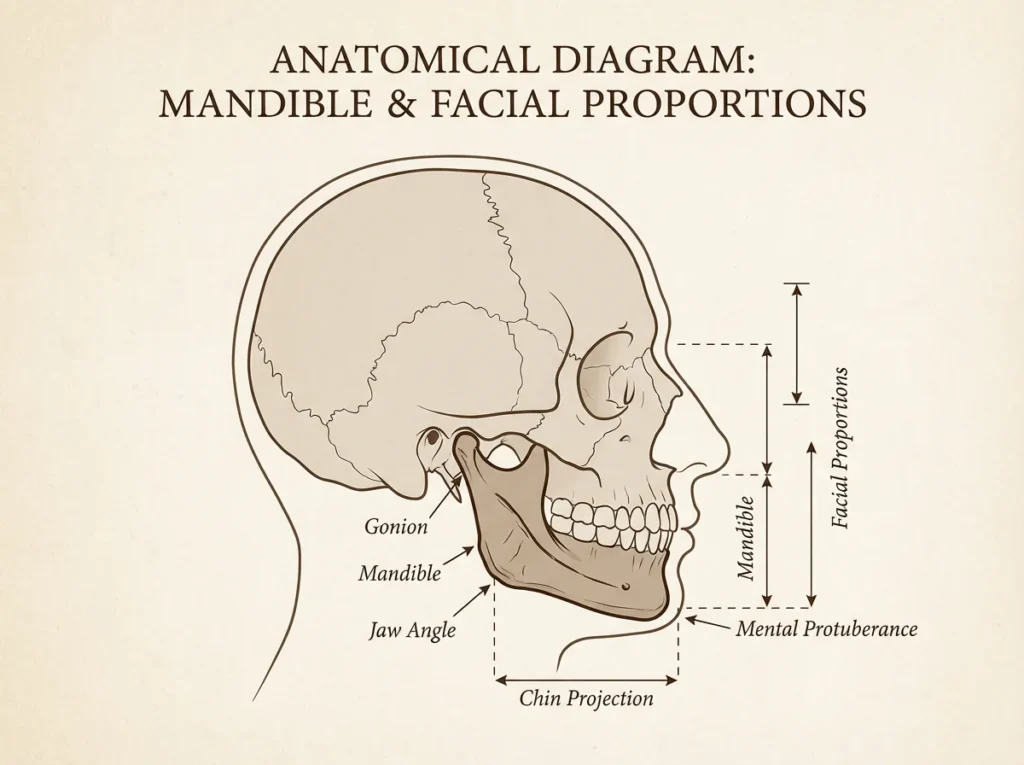
Your jawline’s appearance results from the complex interplay of bone structure, fat distribution, muscle tone, and skin quality. A youthful, attractive jawline typically displays:
Strong Mandibular Border
The horizontal edge of your jawbone (mandible) should create a clear, visible line from chin to jaw angle, forming what’s called the “jawline” in common language. In youth, this bony border sits high and prominent, creating obvious definition between face and neck.
Defined Jaw Angles
The posterior corners where your jaw curves upward toward your ears (the gonial angles) should appear relatively square and well-defined rather than rounded or soft. Prominent jaw angles create the coveted “chiseled” appearance and contribute to facial width that balances other features.
Smooth Mandibular Contour
From chin to jaw angle, the bone edge should follow a relatively smooth, continuous curve without significant irregularity, indentation, or “pre-jowl depression” (the hollow that appears just lateral to the chin as facial fat descends with age).
Appropriate Facial Width
Jaw width should balance with your mid-face and forehead width, creating facial proportions that appear harmonious rather than top-heavy or bottom-heavy. The ideal facial shape approximates an oval or heart, with adequate lower face width to support these aesthetics.
Minimal Submental Fullness
The area beneath your chin and jawline (the submental region) should appear relatively flat and tight, without significant fat accumulation or skin laxity that obscures the mandibular border and creates a “double chin” appearance.
With aging, multiple processes compromise these youthful characteristics:
- Bone Resorption: Your jawbone gradually loses volume and height, particularly along the lower border, reducing natural definition
- Fat Pad Descent: Facial fat compartments descend with gravity, creating jowls that obscure the jawline
- Volume Loss: Deep fat compartments deflate, causing the pre-jowl sulcus (depression) and marionette lines
- Skin Laxity: Collagen and elastin breakdown allow skin to sag rather than draping tautly over bone
- Muscle Changes: The platysma muscle (neck) loses tone, creating banding and pulling the lower face downward
Understanding which of these factors affect your specific jawline determines whether filler provides the improvement you seek or whether other interventions serve you better. Aesthetic Surgery Journal
How Jawline Filler Works: The Science of Non-Surgical Sculpting
Dermal filler for jawline enhancement serves three primary functions:
1. Structural Support and Projection
High-viscosity, cohesive hyaluronic acid fillers placed directly on the bone (supraperiosteal plane) along the mandibular border create immediate projection and definition. Think of it as digitally enhancing a photograph—the filler adds volume exactly where you want it, mimicking the effect of stronger underlying bone structure.
This technique works particularly well for patients with:
- Naturally weak or recessed jawbones
- Age-related bone resorption
- Asymmetric jaw angles requiring balancing
- Narrow lower face proportions
2. Volume Replacement
Filler can restore volume to areas that have deflated with age, particularly:
- The pre-jowl sulcus (depression lateral to chin)
- The chin itself (mentum augmentation)
- The jaw angle region (gonial angle enhancement)
By filling these strategic locations, the overall jawline contour appears more youthful and continuous.
3. Indirect Jowl Improvement
While filler doesn’t remove jowls (which require skin tightening or surgical lifting), strategic placement can camouflage their appearance by:
- Adding volume below the jowl to create a straighter overall line
- Projecting the chin forward to improve side profile
- Creating visual distraction through enhanced jaw angles
The key limitation: filler cannot address significant skin laxity, substantial fat accumulation, or severe tissue descent. For these concerns, Dr. Chang’s comprehensive evaluation determines whether non-surgical treatment provides meaningful improvement or whether you’d benefit more from alternative approaches.
The Ideal Jawline Filler Candidate: Is This Treatment Right for You?
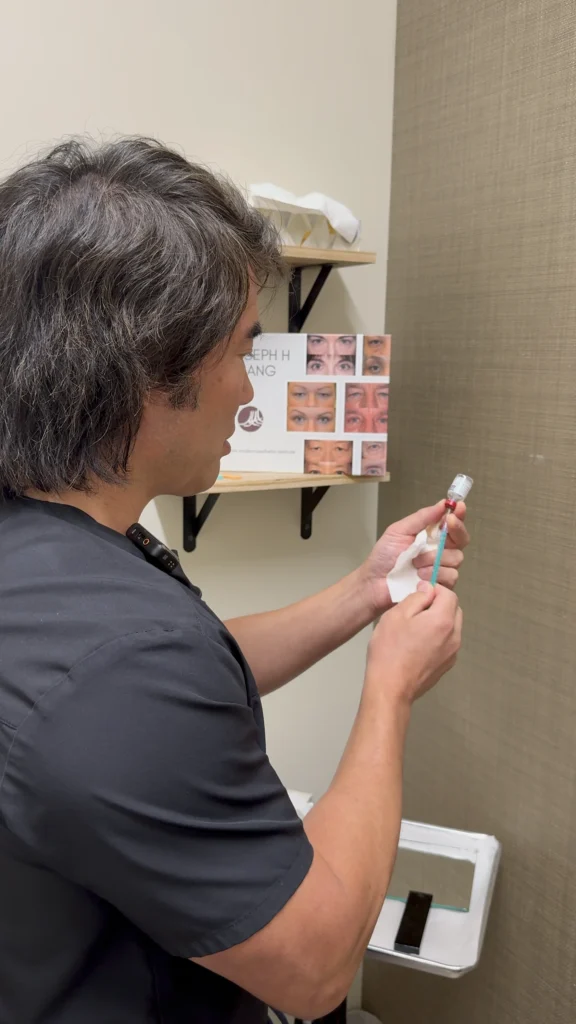
Jawline filler delivers excellent results for specific anatomical patterns. You’re likely an ideal candidate if you have:
7 Signs Jawline Filler Will Work Well for You
- Mild to Moderate Definition Loss: Your jawline has softened with age but you don’t have severe jowls or significant skin laxity.
- Good Skin Quality: Your skin retains reasonable elasticity and thickness—when you pinch lower face skin, it rebounds relatively quickly.
- Localized Volume Loss: You have specific depressions (pre-jowl sulcus, hollowing at jaw angle) rather than generalized facial sagging.
- Naturally Weak Jaw Structure: You’ve always had a less defined jawline due to genetics/bone structure rather than purely age-related changes.
- Realistic Expectations: You understand filler creates subtle-to-moderate enhancement, not the dramatic transformation of surgical jaw augmentation.
- Weight Stability: Your weight has remained relatively stable—significant fluctuation affects how filler appears and how long results last.
- Non-Surgical Preference: You desire improvement without surgery, anesthesia, extended downtime, or permanent alteration.
What Jawline Filler Cannot Fix: Understanding Limitations
Equally important is recognizing when jawline filler won’t deliver the results you want:
Filler Is NOT the Answer If You Have:
Significant Jowls with Skin Excess: Large jowls result from descended fat and loose skin—filler can’t lift or tighten. In fact, adding volume may worsen the appearance by creating more bulk.
Severe Submental Fat (Double Chin): Substantial fat beneath the chin obscures any definition filler creates. You’d benefit more from treatments that reduce fat volume first, then potentially add filler for refinement.
Poor Skin Quality: Very thin, crepey, or severely sun-damaged skin may not support filler well, potentially creating visible lumps or irregular texture.
Massive Weight Loss Skin Laxity: After losing 50+ pounds, excess skin overwhelms any definition filler can provide—surgical skin removal addresses the root problem.
Expectation of Permanent Results: Hyaluronic acid filler is temporary (12-18 months for jawline). If you want permanent change and are willing to accept surgical risk, other options exist.
Dr. Chang’s honest assessment during consultation ensures you invest in treatments that actually work for your anatomy rather than pursuing procedures that can’t address your specific concerns.
Dr. Chang’s Strategic Jawline Filler Technique
Achieving natural, sculpted jawlines requires far more than simply injecting product along the jaw edge. Dr. Chang’s approach combines anatomical expertise with artistic sensibility:
Comprehensive Facial Analysis
Every jawline exists within the context of your entire face. Dr. Chang evaluates:
- Chin Projection: Is your chin appropriately positioned or does it need enhancement to balance jawline definition?
- Mid-Face Volume: Cheek deflation can make the lower face appear disproportionately heavy—addressing this first may change your jawline needs
- Facial Proportions: Assessing vertical thirds and horizontal fifths to ensure jawline enhancement creates overall harmony
- Asymmetry: Identifying and documenting pre-existing differences between left and right sides
- Gender-Specific Aesthetics: Masculine jawlines emphasize angularity and width; feminine jawlines prioritize smooth contours and softer angles
Customized Injection Mapping
Based on your anatomy, Dr. Chang develops a personalized injection plan identifying:
- Exact filler placement points (typically 3-5 per side)
- Volume required for each location (conservative initial approach)
- Appropriate filler product for your tissue characteristics
- Whether chin, pre-jowl, or jaw angle enhancement takes priority
Supraperiosteal Placement Technique
The most natural, longest-lasting jawline results come from placing filler in the deep plane directly on bone (supraperiosteum). This approach:
- Creates structural support rather than superficial “puffiness”
- Minimizes migration risk (filler stays exactly where placed)
- Reduces visibility and palpability (product sits beneath muscle and fat)
- Extends longevity (less movement, slower metabolism)
Dr. Chang’s oculoplastic training provides the anatomical confidence to work safely in deep tissue planes—a skill level that general cosmetic injectors may lack.
Staged, Conservative Volume
Rather than attempting dramatic transformation in a single session, Dr. Chang typically recommends:
- Initial Treatment: Conservative volume (2-4 syringes total) to establish improved contour
- Two-Week Assessment: Evaluating results after swelling resolves and tissue settles
- Optional Refinement: Adding additional volume strategically if more definition is desired
This staged approach prevents the “overdone” appearance that results from aggressive initial treatment and allows your face to adapt gradually to its enhanced contours.
The Treatment Experience: What to Expect

Understanding the actual procedure helps set realistic expectations:
Consultation (30-45 Minutes)
- Medical history review and aesthetic goals discussion
- Facial photography from multiple angles
- Anatomical assessment and treatment planning
- Discussion of expected results, risks, costs, and alternatives
- Answering all your questions thoroughly
Treatment Day (45-60 Minutes)
- Pre-Treatment Photos: Documentation of starting point
- Numbing: Topical anesthetic cream applied 15-20 minutes before injection
- Injection Process: Using cannula (blunt-tipped instrument) or needle technique, Dr. Chang precisely places filler along your jawline according to the treatment plan
- Immediate Assessment: Evaluating symmetry and contour from multiple angles
- Post-Treatment Photos: Documenting immediate results
Most patients describe the sensation as “pressure” rather than pain. The topical numbing cream significantly reduces discomfort, and many fillers now contain lidocaine for additional comfort during injection.
Recovery Timeline
- Immediately After: Mild swelling, possible small bruises at injection points, slight tenderness
- Days 1-3: Peak swelling, some asymmetry as one side may swell more than the other temporarily
- Days 4-7: Swelling subsides significantly, emerging results become visible
- Day 14: Follow-up appointment to assess results and determine if refinement is desired
- Months 12-18: Gradual filler metabolism, results soften over time, maintenance appointment scheduled
You can return to work immediately, though some patients prefer to schedule treatment on Friday to allow a weekend for initial swelling to resolve.
Choosing the Right Filler Product for Jawline Enhancement
Not all hyaluronic acid fillers work equally well for jawline sculpting. The ideal product characteristics include:
High Viscosity and Cohesivity
Jawline filler must provide structural support and resist movement—this requires thick, cohesive gel that maintains its shape rather than spreading unpredictably.
Appropriate Products:
- Juvéderm Volux (specifically designed for jawline/chin)
- Restylane Lyft or Defyne (robust structural fillers)
- Radiesse (calcium hydroxylapatite, different mechanism but excellent for jawline)
Inappropriate Products:
- Thin, soft fillers designed for lips or tear troughs (too mobile, won’t provide definition)
- Older-generation fillers with high water absorption (cause excessive swelling)
Long Duration
Jawline filler typically lasts 12-18 months—longer than most facial areas due to:
- Placement on bone (minimal movement)
- Less metabolic activity than highly mobile areas (lips)
- Larger particle size (slower breakdown)
Reversibility
Hyaluronic acid fillers can be dissolved with hyaluronidase enzyme if you’re unsatisfied—an important safety feature for a prominent facial area. This reversibility provides peace of mind that permanent options (like silicone) cannot offer.
Dr. Chang’s extensive injectable experience means he understands nuanced differences between products and selects the optimal filler for your specific tissue characteristics and goals.
Combining Jawline Filler with Complementary Treatments
Jawline filler rarely exists in isolation—comprehensive facial rejuvenation often involves addressing multiple concerns:
Chin Filler
Enhancing chin projection creates better side profile and makes the jawline appear more defined by comparison. Many patients benefit from combining jawline and chin filler in a single session for harmonious results.
Cheek Filler
Restoring mid-face volume lifts descended tissues, indirectly improving lower face appearance. Strong cheekbones also create facial balance that makes jawline definition appear more natural.
Submental Fat Reduction
For patients with moderate submental fullness (double chin), addressing this concern before or alongside jawline filler creates better overall definition. Options include Kybella (deoxycholic acid injections) or other fat-reduction approaches.
Neuromodulators for Neck Bands
Vertical platysmal bands in the neck can undermine jawline definition. Strategic neuromodulator (Botox/Dysport) injection relaxes these bands, creating a smoother neck-to-jaw transition.
Skin Tightening Procedures
For patients with mild skin laxity, combining jawline filler with radiofrequency or ultrasound skin tightening creates both structure (from filler) and improved skin quality (from tightening devices).
Dr. Chang’s comprehensive approach evaluates your entire lower face and neck to develop an integrated treatment plan rather than focusing narrowly on one area in isolation.
Bakersfield-Specific Considerations

Central Valley lifestyle and environmental factors affect jawline filler outcomes:
Outdoor Activity and Sun Exposure
Bakersfield’s intense UV (often reaching “extreme” levels April-October) accelerates filler breakdown and skin aging. After jawline filler:
- Apply broad-spectrum SPF 50+ daily to face and neck
- Reapply every 2 hours during extended outdoor exposure
- Wear wide-brim hats during peak sun hours
- Consider UV-protective clothing for agricultural or construction work
Heat and Swelling
Summer temperatures regularly exceeding 100°F can temporarily increase facial swelling. Consider:
- Scheduling jawline filler during cooler months (October-March) if possible
- Avoiding strenuous outdoor activity for 48 hours post-treatment
- Staying well-hydrated to minimize inflammation
- Using cool compresses if swelling worsens in heat
Agricultural Dust and Allergens
Kern County’s agricultural activity generates airborne irritants that can exacerbate post-treatment inflammation:
- Keep treatment area clean with gentle cleansing
- Avoid touching or rubbing your jawline
- Minimize outdoor exposure during windy harvest periods (first few days post-treatment)
Professional Image Considerations
For Bakersfield business professionals, timing matters:
- Schedule treatment at least 2 weeks before important presentations, client meetings, or professional photos
- Allow 3-4 weeks if you’re particularly concerned about residual swelling
- Consider starting with conservative volume to maintain discretion
Cost and Investment: Understanding Jawline Filler Pricing
Jawline Filler Cost: $1,200-$3,000 per treatment session
Pricing factors include:
- Product Volume: Most patients require 2-4 syringes initially for noticeable definition
- Filler Type: Premium structural fillers cost more than standard products
- Provider Expertise: fellowship-trained specialists with extensive training typically charge more than general injectors—but deliver superior results
- Geographic Location: California coastal prices often exceed Central Valley pricing
- Practice Overhead: Medical facilities with sophisticated equipment and trained staff have higher costs
Longevity Consideration: At 12-18 months duration, jawline filler’s cost-per-month is actually quite reasonable:
- $2,000 treatment ÷ 15 months = ~$133/month for significantly improved facial definition
Compare this to:
- Weekly salon services ($40-80/week = $2,080-4,160/year)
- Daily premium coffee ($5/day = $1,825/year)
- Gym membership ($50-100/month = $600-1,200/year)
When viewed through this lens, jawline filler represents a moderate investment in your appearance and confidence.
Modern Aesthetic Institute offers financing through CareCredit and Cherry, making treatment accessible with monthly payment options that fit your budget.
Common Jawline Filler Complications and How to Avoid Them
When performed by an expert injector, jawline filler is quite safe. However, complications can occur:
Vascular Occlusion (Rare but Serious)
Filler accidentally injected into a blood vessel can block blood flow, potentially causing tissue death. This represents the most serious filler complication.
How Dr. Chang Prevents This:
- Intimate knowledge of facial vascular anatomy from oculoplastic training
- Using cannula technique when appropriate (blunt tip can’t penetrate vessels)
- Aspirating before injection to check for blood vessel placement
- Injecting slowly while monitoring for early warning signs
- Having hyaluronidase immediately available to dissolve filler if necessary
Asymmetry
Uneven filler placement creates jawline asymmetry that appears unnatural.
Prevention:
- Careful pre-treatment photography and analysis
- Systematic injection technique with frequent step-back assessment
- Conservative volume allowing for staged refinement
“Pillow Face” or Overdone Appearance
Excessive filler volume creates an obviously augmented, puffy appearance rather than natural definition.
Prevention:
- Conservative initial treatment philosophy
- Understanding facial proportions and appropriate enhancement limits
- Honest communication about realistic goals
Visible or Palpable Lumps
Superficial filler placement or using inappropriate products can create bumps you can see or feel.
Prevention:
- Deep supraperiosteal placement (beneath muscle and fat)
- Using high-cohesivity products designed for structural support
- Thorough massage and molding immediately after injection
Prolonged Swelling
Some patients experience swelling lasting weeks or months rather than days.
Management:
- Ruling out infection or inflammatory reaction
- Conservative observation (most resolves spontaneously)
- Hyaluronidase dissolution if swelling proves intolerable
Dr. Chang’s 25+ years of injectable experience means he anticipates potential problems before they occur and manages any complications promptly if they arise.
Jawline Filler for Men: Masculine Aesthetic Goals
Approximately 40% of jawline filler patients are men seeking enhanced definition without feminine softness. Key differences in treating male versus female patients:
Angularity Over Smoothness
Male jawlines emphasize sharp angles, particularly at the gonial angle (jaw corner). Dr. Chang’s injection technique for men creates:
- More prominent, square jaw angles
- Straighter mandibular border (less curved)
- Broader lower face width
- More forward chin projection
Proportionally Larger Volume
Men typically have larger facial structures requiring more filler to achieve noticeable definition—often 3-5 syringes versus 2-3 for women.
Natural Masculinity Preservation
The goal isn’t “prettification” but enhancement of inherent masculine features—strength, structure, definition. Dr. Chang’s conservative approach ensures results look naturally rugged rather than overtly aesthetic.
Professional Discretion
Male patients often prioritize subtlety even more than female patients, wanting improvement without colleagues or clients noticing “work done.”
When Jawline Filler Isn’t Enough: Recognizing Limitations
Dr. Chang’s commitment to honest guidance means sometimes recommending against jawline filler:
Significant Jowls Requiring Lifting
If your jowls are prominent and skin laxity is substantial, filler alone won’t create the improvement you want. In these cases, Dr. Chang provides honest feedback about limitations.
Expectations Exceeding Filler Capability
If you desire dramatic, permanent transformation, non-surgical filler isn’t the answer. Setting realistic expectations prevents disappointment.
Anatomical Factors Limiting Results
Certain bone structures or tissue qualities don’t support optimal filler outcomes. Dr. Chang identifies these during consultation rather than proceeding with treatment that won’t satisfy you.
Questions to Ask During Your Jawline Filler Consultation

Protect yourself and ensure expert treatment by asking:
- “How many jawline filler treatments do you perform monthly?” (Higher volume suggests more experience)
- “Which specific filler product will you use and why?” (Should be high-viscosity HA or Radiesse designed for structural support)
- “Where exactly will you place the filler—which tissue plane?” (Answer should be “supraperiosteal” or “on the bone”)
- “Will you use cannula or needle technique?” (Both can work; understanding the approach matters)
- “What’s your complication rate and how do you manage vascular occlusion?” (Should have immediate access to hyaluronidase and clear emergency protocol)
- “Can I see before-and-after photos of patients with similar anatomy?” (Evidence of natural results in patients like you)
- “What happens if I’m not satisfied with my results?” (HA filler can be dissolved; good injectors welcome this conversation)
An experienced injector welcomes detailed questions and answers thoroughly without defensiveness.
Your Path to Naturally Defined Jawline Contours
Jawline filler offers accessible, non-surgical enhancement for patients with the right anatomical conditions and realistic expectations. When performed by an expert injector who understands facial proportions, uses appropriate products, and prioritizes natural results over dramatic transformation, the procedure delivers meaningful improvement in facial definition, profile aesthetics, and overall confidence.
Dr. Joseph H. Chang’s unique combination of ophthalmology training, oculoplastic fellowship training from UCLA, and 25+ years serving Bakersfield provides the expertise necessary to assess your candidacy accurately, inject safely and precisely, and create results that look naturally sculpted rather than obviously enhanced.
Whether you’re considering jawline filler to counteract aging changes, strengthen naturally weak bone structure, or simply enhance your best features, schedule a comprehensive consultation at Modern Aesthetic Institute. Discover whether non-surgical jawline enhancement can deliver the definition you desire—or whether alternative approaches better serve your goals.
Schedule Your Jawline Filler Consultation at Modern Aesthetic Institute
About the Author
Dr. Joseph H. Chang is an ophthalmologist specializing in oculoplastic surgery with over 25 years of aesthetic medicine experience serving Bakersfield and Kern County. Trained at UCLA’s prestigious Jules Stein Eye Institute, Dr. Chang brings surgical precision and artistic sensibility to every injectable treatment. His 25+ years of injectable experience reflects his expertise and the trust patients place in his care. At Modern Aesthetic Institute, Dr. Chang’s philosophy centers on natural enhancement, patient education, and honest guidance—helping you achieve a refreshed, youthful appearance without looking “overdone.” His specialized training in oculoplastic surgery provides unique advantages for facial aesthetic treatments, combining intimate anatomical knowledge with years of refined injectable technique.
Frequently Asked Questions
1. How many syringes of filler do I need for noticeable jawline definition?
Most patients require 2-4 syringes (1-2ml each) for visible jawline enhancement during initial treatment. The exact amount depends on your starting anatomy, desired outcome, and bone structure. Patients with naturally weak or recessed jaws may need toward the higher end (3-4 syringes), while those simply wanting mild refinement might achieve goals with 2 syringes. Men typically require more volume than women due to larger facial proportions—often 3-5 syringes for masculine definition. Dr. Chang’s approach is conservative initially, with the option to add more filler at your two-week follow-up if you desire additional definition. Starting with moderate volume prevents the “overdone” appearance while achieving meaningful improvement.
2. Does jawline filler hurt? What does the injection feel like?
Discomfort during jawline filler is generally mild to moderate. Dr. Chang applies topical numbing cream 15-20 minutes before injection, which significantly reduces sensation. Most modern fillers also contain lidocaine (local anesthetic) within the product itself. Patients typically describe the feeling as “pressure” or “fullness” rather than sharp pain. The jawline area is less sensitive than lips but more sensitive than cheeks. Using cannula technique (blunt-tipped instrument) causes less discomfort than needle injection. Post-treatment, expect mild tenderness for 2-3 days—similar to the feeling after dental work. Over-the-counter pain relievers manage any discomfort easily. The procedure is well-tolerated by even anxious patients.
3. Will people be able to tell I’ve had jawline filler?
When performed expertly with conservative volume, jawline filler creates natural-looking definition that people notice as “you looking great” rather than “you had work done.” The key is appropriate volume—filler should enhance your existing bone structure, not create an obviously augmented appearance. Dr. Chang’s philosophy prioritizes subtle, age-appropriate enhancement that maintains facial harmony. Most patients report compliments like “you look well-rested” or “have you lost weight?” rather than “did you have something done?” The filler itself isn’t visible or palpable when placed correctly in the deep supraperiosteal plane. If you’re concerned about discretion, starting with conservative volume allows gradual enhancement that friends and colleagues won’t pinpoint to a specific procedure.
4. Can jawline filler fix my jowls?
Jawline filler can camouflage mild jowls by adding definition below them, creating a straighter overall contour. However, filler cannot lift or remove jowls—it doesn’t address the root causes of descended fat and loose skin. For patients with small jowls and good skin quality, strategic filler placement provides noticeable improvement. For moderate-to-severe jowls, filler alone won’t deliver satisfying results and may actually worsen appearance by adding volume that creates more bulk. During your consultation, Dr. Chang honestly assesses whether your jowls are mild enough for filler to help or whether you’d benefit more from other approaches. His oculoplastic training allows him to evaluate anatomical problems surgically and recommend the treatment that will actually work.
5. How long does jawline filler last before I need a touch-up?
Jawline filler typically lasts 12-18 months—longer than most facial areas due to placement on bone with minimal movement. Duration varies based on individual metabolism, filler product used (Radiesse may last slightly longer than hyaluronic acid), lifestyle factors (sun exposure accelerates breakdown), and volume injected (larger amounts last proportionally longer). The filler doesn’t disappear suddenly; it gradually softens over months. Most patients schedule maintenance appointments around 14-16 months to preserve consistent results before complete product metabolism. Some patients choose to let filler fade completely before re-treating; others prefer maintaining results continuously with regular maintenance. The flexibility of timing allows you to control costs and appearance on your schedule.
6. I’m a man—will jawline filler look natural or too feminine?
Jawline filler absolutely works for men and can be customized to create masculine aesthetics. The key is technique and volume placement. For male patients, Dr. Chang emphasizes: (1) Sharp, angular jaw corners rather than smooth curves, (2) Straighter mandibular border for more “chiseled” appearance, (3) Broader overall lower face width, and (4) More forward chin projection. Men typically require more filler volume than women (3-5 syringes vs. 2-3) to achieve proportionally appropriate definition. Dr. Chang’s approach for male patients creates strength and structure—not softness or prettification. Approximately 40% of his jawline filler patients are men, including Bakersfield professionals, agricultural industry leaders, and patients seeking competitive advantage in appearance-conscious fields. Results look naturally masculine, not obviously enhanced.
7. Can I exercise after jawline filler? When can I return to normal activities?
Avoid strenuous exercise for 48 hours after jawline filler to minimize swelling and bruising risk. Light walking is fine immediately, but skip: heavy weightlifting, high-intensity cardio, hot yoga, or any activity that significantly increases facial blood flow and blood pressure. After 48 hours, gradually resume normal exercise. Also avoid for the first 24-48 hours: excessive heat (saunas, hot tubs), alcohol consumption (increases bruising), aggressive facial massage, dental work, and lying completely flat (sleep with head slightly elevated). You can return to work immediately—most patients schedule Friday appointments to allow weekend recovery. Makeup can cover any bruising starting 24 hours post-treatment. Normal daily activities (driving, computer work, socializing) resume immediately. Just avoid touching or putting pressure on your jawline during the first few days as filler settles into position.
8. What happens if I don’t like my jawline filler results?
One significant advantage of hyaluronic acid filler is complete reversibility. If you’re unsatisfied with results, Dr. Chang can inject hyaluronidase enzyme that dissolves the filler within 24-48 hours. This provides peace of mind that permanent augmentation options cannot offer. However, Dr. Chang’s conservative approach and thorough consultation process minimize dissatisfaction risk. Most concerns arise from overfilling or poor technique—both avoided through staged treatment and expert injection. If minor asymmetry occurs (one side slightly fuller), small adjustments with additional filler balance results easily. If you simply decide jawline enhancement isn’t for you, dissolution returns your appearance to baseline. The key is choosing an experienced injector like Dr. Chang who prioritizes natural results and has extensive experience with both placing and correcting jawline filler.