

When you start researching eyelid surgery, you’ll quickly discover that many different specialists offer blepharoplasty procedures—plastic surgeons, dermatologists, facial plastic surgeons, and ophthalmologists. While technical skill matters across all specialties, there’s a compelling reason why choosing an eye surgeon with fellowship training in oculoplastic surgery provides distinct advantages for your blepharoplasty journey. At Modern Aesthetic Institute in Bakersfield, Dr. Joseph H. Chang’s unique background as both an ophthalmologist and oculoplastic surgeon trained at UCLA’s prestigious Jules Stein Eye Institute offers patients a level of expertise that addresses both aesthetic goals and critical eye health considerations.
Understanding the Critical Connection Between Eyes and Aesthetics
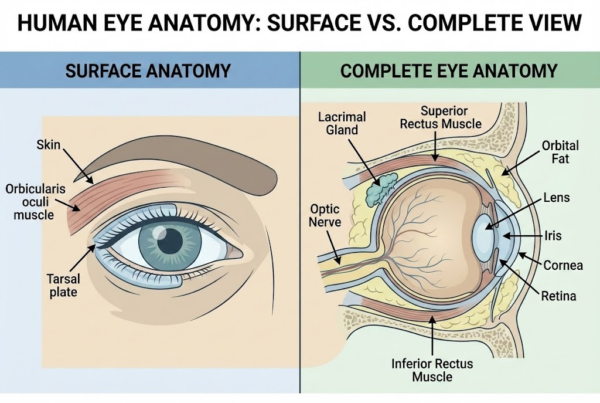
Your eyelids serve dual purposes that exist in delicate balance. Aesthetically, they frame your eyes and significantly influence facial expressions and overall appearance. Functionally, they protect your eyes, distribute tears across the ocular surface, and maintain optimal vision. Any surgical intervention in this region must respect both aspects—beautiful results mean nothing if eye function is compromised, and perfectly functional eyelids that don’t meet aesthetic expectations leave patients disappointed.
This is where an eye surgeon’s training becomes invaluable. While all qualified surgeons understand surface anatomy, eye surgeons possess intimate knowledge of the deeper structures, including tear glands, drainage systems, eye muscles, and the complex relationship between eyelid position and ocular health. This comprehensive understanding enables them to make surgical decisions that optimize both appearance and function.
Dr. Chang’s patients frequently share that they initially didn’t realize how interconnected these elements were until their consultation. Many come seeking purely aesthetic improvements—removing excess skin, eliminating puffiness, achieving a more youthful appearance—only to discover through his comprehensive evaluation that they also have functional issues like dry eyes, vision obstruction, or eyelid malposition that can be addressed simultaneously.
The Unique Advantages of Oculoplastic Surgery Training
Oculoplastic surgery represents a subspecialty requiring additional fellowship training beyond standard ophthalmology or plastic surgery residencies. This specialized education focuses exclusively on the intricate structures surrounding the eyes, including eyelids, tear ducts, orbits, and facial areas adjacent to the eyes.
Dr. Chang completed his fellowship at UCLA’s Jules Stein Eye Institute, one of the nation’s most prestigious programs for oculoplastic surgery. This rigorous training equipped him with expertise that extends far beyond cosmetic eyelid surgery to include complex reconstructive procedures, orbital surgery, and management of medical conditions affecting the eye area. This breadth of experience means he can recognize and address nuances that surgeons without this specialized background might overlook.
Consider tear production and drainage—critical factors that significantly impact blepharoplasty outcomes. Eye surgeons evaluate lacrimal gland function, tear film quality, and drainage system patency as routine parts of pre-operative assessment. Alterations in eyelid position or tension during surgery can affect tear distribution, potentially causing chronic dryness or excessive tearing post-operatively. Dr. Chang’s training enables him to anticipate and prevent these complications through precise surgical planning and technique modification.
Comprehensive Pre Operative Assessment: More Than Skin Deep
When you consult with Dr. Chang for blepharoplasty at our Bakersfield practice, you’ll experience an evaluation that goes far beyond measuring excess skin. His comprehensive assessment includes:
Vision Testing and Visual Field Evaluation: Excess upper eyelid skin can obstruct peripheral vision, creating functional impairment. Dr. Chang documents these issues thoroughly, helping patients understand the medical necessity alongside aesthetic benefits.
Tear Production Assessment: Using specialized tests, he evaluates both tear quantity and quality. Patients with borderline dry eye conditions require modified surgical techniques to prevent post-operative discomfort.
Eyelid Position and Tone Measurement: The relationship between your eyelids and eyeball surface (eyelid laxity, position relative to the cornea, and closure completeness) significantly impacts surgical planning. Dr. Chang identifies issues like ectropion risk or lagophthalmos potential before surgery.
Orbital Fat Assessment: Unlike skin excess, fat pad evaluation requires understanding of deep orbital anatomy. Dr. Chang determines which fat compartments contribute to puffiness versus which provide necessary support, ensuring removal or repositioning enhances appearance without creating hollowness.
Brow Position Analysis: Many patients seeking blepharoplasty actually have brow ptosis (drooping) contributing to upper eyelid heaviness. Dr. Chang identifies these cases and discusses whether brow lifting would provide better results than eyelid surgery alone.
Medical History Integration: Conditions like thyroid disease, autoimmune disorders, or previous eye surgeries significantly influence blepharoplasty planning. Dr. Chang’s medical background enables sophisticated risk assessment and management strategies.
This thorough evaluation often reveals issues patients weren’t aware they had. One Bakersfield patient came seeking cosmetic improvement but learned through Dr. Chang’s assessment that her chronic headaches resulted from constantly elevating her eyebrows to compensate for vision obstruction from excess eyelid skin. Her blepharoplasty eliminated both the aesthetic concern and the headaches—an outcome impossible without comprehensive medical evaluation.
7 Critical Eye Health Factors Only Eye Surgeons Routinely Assess
1. Tear Film Stability and Dry Eye Risk The tear film’s three layers—lipid, aqueous, and mucin—must remain balanced for comfortable vision. Dr. Chang evaluates tear break-up time and Schirmer test results to identify patients at risk for post-operative dry eye. His surgical modifications for these patients, including more conservative skin removal and preservation of eyelid tension, prevent chronic discomfort many experience after blepharoplasty performed without these considerations.
2. Eyelid-Eyeball Relationship (Lagophthalmos Prevention) Your eyelids should close completely during sleep, protecting your eyes from exposure. Overly aggressive skin removal or improper technique can create lagophthalmos—inability to fully close eyelids. Dr. Chang’s precise measurements and conservative approach ensure adequate eyelid length preservation while still achieving dramatic aesthetic improvement.
3. Lower Eyelid Tone and Ectropion Risk Lower eyelid laxity increases ectropion risk (eyelid turning outward) after blepharoplasty. Dr. Chang performs specialized tests during consultation to measure tone and incorporates canthal support procedures when necessary, preventing this disfiguring and uncomfortable complication.
4. Orbital Septum Integrity and Fat Management The orbital septum—a thin membrane containing fat pads behind the eyelids—requires careful handling during surgery. Dr. Chang’s understanding of septal anatomy allows precise fat removal or repositioning without damaging surrounding structures or creating contour irregularities.
5. Levator Muscle Function and Ptosis Evaluation The levator muscle raises your upper eyelid. Weakness causes ptosis (drooping), which excess skin may partially mask. Dr. Chang identifies pre-existing ptosis and discusses whether levator repair should accompany blepharoplasty for optimal results. Many plastic surgeons miss this diagnosis, leading to disappointed patients who still have drooping after surgery.
6. Corneal Protection During and After Surgery Throughout your procedure, Dr. Chang employs specialized protective techniques that safeguard the corneal surface. His awareness of corneal vulnerability and healing requirements ensures your eyes remain healthy during recovery.
7. Systemic Conditions Affecting Eye Healing Thyroid eye disease, Sjögren’s syndrome, rheumatoid arthritis, and other conditions influence both surgical planning and healing. Dr. Chang’s medical training enables identification of red flags in patient history and appropriate management strategies that surgeons without medical backgrounds might overlook.
The Dual Benefit Approach: Aesthetic Excellence Meets Medical Precision
Dr. Chang’s philosophy centers on what he calls “dual benefit aesthetics”—achieving beautiful, natural-looking results while simultaneously optimizing or maintaining eye health and function. This approach recognizes that true success requires both elements working in harmony.
For upper blepharoplasty, this means removing precisely the right amount of excess skin and fat to create refreshed, youthful eyes without compromising eyelid closure or creating an operated appearance. Dr. Chang’s conservative technique preserves natural contours while eliminating the tired, aged look that brought you to consultation.
Lower blepharoplasty under Dr. Chang’s care addresses under-eye bags and skin excess while maintaining proper eyelid position and tone. His techniques minimize scarring, prevent lower lid malposition, and preserve the natural transition between eyelid and cheek—creating smooth, rejuvenated under-eyes that don’t betray surgical intervention.
Many Bakersfield patients appreciate that Dr. Chang honestly discusses what blepharoplasty can and cannot achieve. If your concerns would be better addressed through alternative or additional treatments—perhaps brow lifting, midface volumization with fillers, or skin resurfacing—he provides that guidance. His goal is your optimal outcome, not simply performing surgery.
8 Questions That Reveal a Surgeon’s Eye Specific Expertise
1. “How will you assess my tear production before surgery?” Qualified response: Detailed explanation of Schirmer testing, tear break-up time evaluation, and how results influence surgical planning. Red flag: Dismissive answer or admission they don’t routinely perform these tests.
2. “What’s your approach if I have borderline eyelid laxity?” Qualified response: Discussion of canthal support techniques, lateral tarsal strip procedures, or other methods to prevent post-operative ectropion. Red flag: Unfamiliarity with these terms or procedures.
3. “How do you determine how much upper eyelid skin to remove?” Qualified response: Explanation of pinch test performed with eyes open and closed, consideration of brow position, and conservative approach ensuring complete eyelid closure. Red flag: Vague answer about removing “excess” without specific methodology.
4. “Will you perform a complete eye health examination before surgery?” Qualified response: Yes, including vision testing, intraocular pressure measurement, and external eye examination. Red flag: No or minimal pre-operative eye health assessment planned.
5. “How will blepharoplasty affect my current dry eye condition?” Qualified response: Honest discussion that surgery may temporarily worsen symptoms, explanation of mitigation strategies, and realistic timeline for improvement. Red flag: Assurance that surgery will improve dry eyes (it rarely does immediately).
6. “What’s your experience managing complications like ectropion or lagophthalmos?” Qualified response: Calm, confident discussion of experience managing these issues both preventively and if they occur. Red flag: Defensive reaction or suggestion these complications are extremely rare (they’re not).
7. “Do you have privileges at a hospital to manage serious complications?” Qualified response: Yes, with specific hospital name(s) where they have admitting privileges. Red flag: Office-only practice without hospital affiliation or backup arrangements.
8. “How does your training specifically prepare you for eyelid surgery?” Qualified response: For Dr. Chang, an ophthalmologist with fellowship training in oculoplastic surgery from UCLA’s Jules Stein Eye Institute and 25+ years of experience. Red flag: Training focused solely on aesthetic procedures without comprehensive eye health education.
Real Bakersfield Patient Outcomes: When Medical Expertise Makes the Difference

Sarah, a 58-year-old teacher from Bakersfield, came to Dr. Chang frustrated after consultations with two other surgeons. Both recommended aggressive upper and lower blepharoplasty to address her tired appearance. Dr. Chang’s comprehensive evaluation revealed moderate dry eye disease and early thyroid eye involvement—conditions the other surgeons hadn’t identified. He recommended postponing surgery until her thyroid condition stabilized and her dry eyes improved with medical management. Six months later, with her eye health optimized, Dr. Chang performed a modified blepharoplasty with conservative tissue removal and additional protective techniques. Sarah’s results were stunning, and she experienced none of the dry eye complications she would have likely suffered without proper pre-operative optimization.
Michael, a 62-year-old executive, sought treatment for under-eye bags affecting his professional appearance. His previous consultation recommended standard lower blepharoplasty with skin removal. Dr. Chang’s examination revealed that Michael’s bags resulted primarily from orbital fat prolapse without significant skin excess, and he had borderline lower eyelid laxity. Dr. Chang performed transconjunctival blepharoplasty (accessing fat from inside the eyelid without external incisions) combined with canthal support to prevent ectropion. Michael achieved dramatic improvement without visible scarring and maintained proper eyelid position—outcomes that the skin-removal approach would not have provided.
These cases illustrate how oculoplastic expertise enables customized surgical planning that accounts for individual anatomical variations and health conditions, delivering superior results with minimized complication risks.
Long Term Eye Health: The Gift That Keeps Giving
Choosing an eye surgeon for your blepharoplasty provides advantages extending far beyond your immediate surgical results. As you age, having an established relationship with an ophthalmologist who knows your eye anatomy intimately becomes increasingly valuable.
Dr. Chang’s patients benefit from ongoing eye health monitoring during their aesthetic treatment journey. Annual follow-ups for injectable maintenance or skin care consultations include basic eye health screening. This integrated approach has enabled early detection of conditions like glaucoma, cataracts, and macular degeneration in several patients—often years before symptoms would have prompted medical attention.
Additionally, if you develop eye health issues in the future, having your surgical records and anatomical details already documented with an eye surgeon streamlines care. Dr. Chang can quickly determine how previous blepharoplasty might influence treatment of new conditions and adapt his approach accordingly.
The relationship you establish for aesthetic enhancement evolves into comprehensive, lifelong eye care—an unexpected but valuable benefit that patients consistently mention as one of their favorite aspects of choosing Dr. Chang for their blepharoplasty.
Special Considerations for Bakersfield and Kern County Patients

Our Central Valley location presents unique environmental factors influencing eye health and blepharoplasty outcomes. Bakersfield’s dry climate, high pollen levels, and intense sun exposure affect both pre-operative planning and post-operative care.
Dr. Chang incorporates these regional considerations into every consultation. Patients with seasonal allergies receive timing recommendations to schedule surgery during lower pollen periods, minimizing inflammation risk. The area’s low humidity requires extra attention to dry eye prevention, influencing surgical technique and post-operative management protocols.
Bakersfield’s agricultural environment means many patients work outdoors or in dusty conditions. Dr. Chang provides specific guidance for these individuals regarding recovery timing, protective measures during healing, and strategies for returning to work safely without compromising results.
The intense Central Valley sun necessitates aggressive sun protection following blepharoplasty. Dr. Chang educates every patient about UV damage risks to healing tissues and provides specific recommendations for sunglasses, sunscreen, and activity timing to protect their investment and optimize long-term results.
The Conservative Approach: Why Less is Often More
One of the most significant advantages of Dr. Chang’s oculoplastic background is his inherently conservative surgical philosophy. His training emphasizes tissue preservation and functional maintenance rather than aggressive alteration. This approach consistently delivers natural-looking results that enhance rather than change your fundamental appearance.
Many patients express relief when Dr. Chang explains that achieving beautiful results doesn’t require removing the maximum amount of skin or fat. In fact, overly aggressive surgery often creates problems—hollowed eyes that look gaunt, surprised or startled expressions from over-elevated eyelids, visible scarring, and chronic dry eyes.
Dr. Chang’s technique involves meticulous measurement, conservative tissue removal, and precise closure techniques that create refined, subtle improvements. Friends and colleagues will notice you look refreshed and rested but won’t be able to identify that you’ve had surgery—exactly the outcome most patients desire.
This conservation extends to fat management. Rather than simply excising bulging fat pads, Dr. Chang often repositions them to fill areas where volume loss contributes to aging appearance. This technique, called fat transposition, provides longer-lasting, more natural results than simple removal.
Integration with Complementary Aesthetic Treatments
Dr. Chang’s comprehensive aesthetic expertise enables seamless integration of blepharoplasty with complementary treatments for harmonious facial rejuvenation. His nationally recognized injectable expertise means he can coordinate surgical and non-surgical approaches for optimal outcomes.
Many patients discover that combining blepharoplasty with strategic Botox or Dysport addresses both static aging (excess skin) and dynamic aging (wrinkles from muscle movement). Treating crow’s feet, forehead lines, and frown lines alongside eyelid surgery creates comprehensive upper face rejuvenation with natural, balanced results.
For patients with volume loss contributing to aged appearance, Dr. Chang may recommend dermal fillers in areas adjacent to the eyelids. Midface augmentation with fillers like Sculptra or hyaluronic acid products can enhance blepharoplasty results by restoring youthful contours and supporting lower eyelid position.
The timing and coordination of these combined treatments requires sophisticated understanding of healing timelines, product interactions, and facial aesthetics—expertise Dr. Chang has refined over 25+ years. He guides patients toward comprehensive rejuvenation strategies personalized to their unique anatomy, concerns, and goals.
When Blepharoplasty Alone Isn’t the Answer: Honest Guidance You Can Trust
One of the most valuable aspects of consulting with Dr. Chang is his commitment to honest, patient-centered guidance. If blepharoplasty won’t effectively address your concerns, he tells you clearly and explains why.
Some patients seeking eyelid surgery actually have brow ptosis as their primary issue. Lifting heavy, descended eyebrows would provide better results than removing eyelid skin. Dr. Chang performs brow lifting procedures and can discuss whether this alternative or combination approach makes sense for you.
Others have concerns better addressed through non-surgical treatments. Hollow under-eyes might benefit more from carefully placed dermal filler than from surgery. Dark circles resulting from pigmentation or visible vessels require different interventions than blepharoplasty provides.
Dr. Chang’s diverse expertise across surgical and non-surgical treatments means he can guide you toward the most effective approach rather than defaulting to surgery regardless of whether it’s optimal for your situation. This honesty builds trust and ensures you invest in treatments that truly meet your needs.
A Self-Pay Practice: What That Means for You
Modern Aesthetic Institute is a self-pay practice. We do not bill insurance, and we do not prepare insurance documentation. Most insurers classify blepharoplasty as cosmetic, and building a surgical plan around carrier rules can mean delays, restrictions, and paperwork instead of care. Self-pay keeps it simple: you receive transparent pricing at your consultation, and you know the full cost before you decide anything. Your plan is designed around your anatomy and your goals.
Your Consultation: The First Step Toward Refreshed Eyes and Comprehensive Care
Scheduling a consultation with Dr. Chang begins your journey toward not just beautiful eyelids but comprehensive eye health care that extends throughout your life. During this thorough evaluation, you’ll experience the difference that specialized oculoplastic training makes.
Dr. Chang takes time to understand your concerns, explain your anatomy, discuss realistic expectations, and develop a customized surgical plan addressing both your aesthetic goals and eye health considerations. His warm, approachable manner combined with obvious expertise puts patients at ease, even those nervous about surgery.
You’ll leave consultation understanding exactly what your procedure involves, what results to expect, what your recovery will entail, and how Dr. Chang’s unique background provides advantages for your specific situation. Many patients express that their consultation was the most educational and comprehensive medical evaluation they’ve ever experienced.
The investment you make in blepharoplasty represents more than cosmetic improvement. You’re establishing a relationship with an eye health expert who will be there for you long after your incisions heal, providing ongoing care that protects your vision and enhances your appearance for years to come.
Ready to discover how an oculoplastic surgeon’s expertise can deliver superior blepharoplasty results while prioritizing your eye health? Contact Modern Aesthetic Institute in Bakersfield today to schedule your comprehensive consultation with Dr. Joseph H. Chang. Experience the difference that 25+ years of aesthetic medicine combined with specialized oculoplastic surgery training makes in achieving natural, beautiful, and lasting results.
Frequently Asked Questions
What’s the difference between a plastic surgeon and an eye surgeon for blepharoplasty?
Plastic surgeons focus on aesthetic body surgery with varying levels of facial specialization. Eye surgeons (ophthalmologists with oculoplastic training) specialize exclusively in eye and surrounding structures, combining medical eye expertise with surgical skill. Dr. Chang’s oculoplastic background ensures both beautiful results and comprehensive eye health protection throughout your blepharoplasty journey in Bakersfield.
Does insurance cover blepharoplasty performed by eye surgeons?
Modern Aesthetic Institute is a self-pay practice. We do not bill insurance or prepare insurance paperwork. Instead, you receive clear, transparent pricing at your consultation, and your treatment plan is decided by you and your surgeon rather than a carrier. Most insurers classify cosmetic eyelid surgery as elective, so self-pay keeps the process simple and predictable.
Can an eye surgeon deliver the same aesthetic results as a cosmetic plastic surgeon?
Absolutely—often superior results. Dr. Chang’s oculoplastic training combines aesthetic artistry with intimate anatomical knowledge. His 25+ years of experience, conservative surgical philosophy, and nationally recognized injectable expertise deliver natural-looking rejuvenation without the overcorrected appearance that aggressive techniques sometimes create. Bakersfield patients consistently praise his balanced approach to beauty and eye health.
What eye health problems can complicate blepharoplasty if not properly addressed?
Dry eye syndrome, thyroid eye disease, previous eye surgery, autoimmune conditions, poor eyelid tone, and certain medications can all affect blepharoplasty outcomes. Dr. Chang’s comprehensive pre-operative evaluation identifies these issues and modifies surgical planning accordingly. Surgeons without eye-specific training may miss these factors, leading to complications or disappointing results.
Should I see an eye surgeon even if I only want cosmetic eyelid improvement?
Yes—your eyes deserve specialized expertise regardless of whether your goals are aesthetic or functional. Dr. Chang addresses cosmetic concerns while simultaneously optimizing eye health, providing benefits you might not realize you needed. Many Bakersfield patients discover functional improvements like easier vision and reduced headaches alongside their aesthetic enhancement.
How does Dr. Chang’s UCLA training specifically benefit Bakersfield blepharoplasty patients?
UCLA’s Jules Stein Eye Institute represents one of America’s premier oculoplastic surgery programs. Dr. Chang’s fellowship training there provided exposure to complex cases, advanced techniques, and rigorous standards that inform his approach to every procedure. This elite education combined with 25+ years serving Bakersfield means you receive world-class expertise with personalized, compassionate local care.
What questions should I ask to evaluate a blepharoplasty surgeon’s eye expertise?
Ask about their specific training (ophthalmology residency plus oculoplastic fellowship?), pre-operative eye health assessment protocols, experience managing complications like ectropion or lagophthalmos, hospital privileges, and how they modify techniques for patients with dry eyes or other conditions. Dr. Chang welcomes these questions and provides detailed answers that demonstrate his specialized expertise.
Can blepharoplasty improve my vision if excess skin is blocking my eyesight?
Yes—removing excess upper eyelid skin that droops into your visual field can dramatically improve peripheral vision. Dr. Chang documents this obstruction through visual field testing and photographs to track your improvement. Many Bakersfield patients report they didn’t realize how much their vision was affected until after surgery restored their full visual range.